Introduction: The Critical Role of Rate Limiting in SMS Services
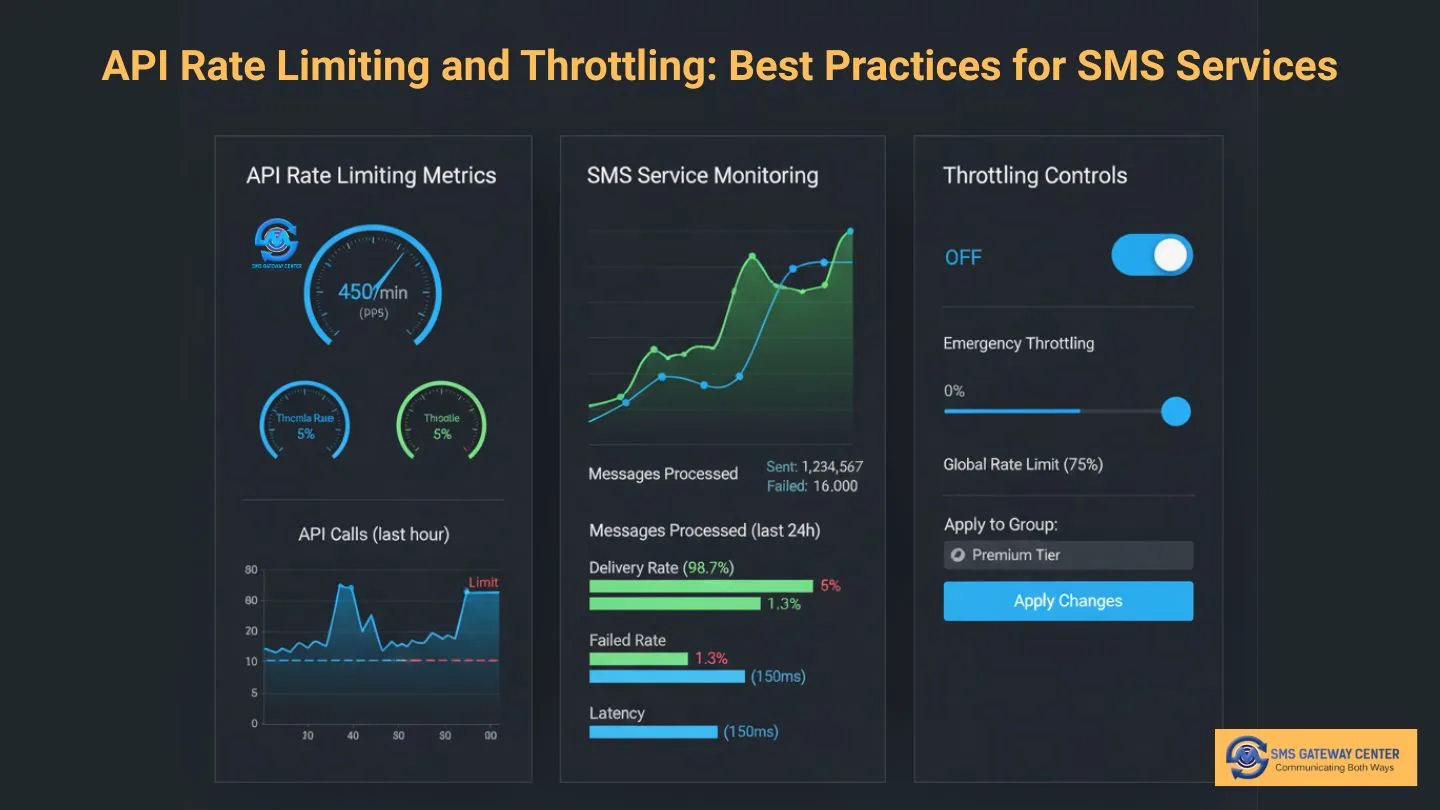
In today’s digital landscape, where SMS services power everything from OTP verification to bulk marketing campaigns, API rate limiting and throttling have become indispensable tools for maintaining service reliability and security.
As businesses increasingly rely on SMS APIs for critical communications, implementing robust rate limiting strategies ensures your messaging infrastructure can handle traffic spikes while preventing abuse and maintaining optimal performance.
Understanding API Rate Limiting vs. Throttling
While often used interchangeably, rate limiting and throttling serve distinct purposes in SMS service management:
- Rate Limiting: Sets hard boundaries on the number of requests per time window, typically rejecting excess requests
- Throttling: Gradually reduces request processing speed when limits are approached, maintaining service availability
For SMS gateway services, both approaches work together to create a comprehensive traffic management strategy.
Implementation Strategies for SMS Services
1. Multi-Tier Rate Limiting Architecture
Implement a layered approach to rate limiting that addresses different aspects of SMS service usage:
User-Level Limits
- Basic users: 100 SMS per hour
- Premium users: 1,000 SMS per hour
- Enterprise clients: Custom limits based on SLA agreements
API Endpoint Limits
- OTP SMS endpoints: 500 requests per minute
- Bulk SMS endpoints: 50 requests per minute
- Transactional SMS endpoints: 1,000 requests per minute
2. Advanced Rate Limiting Algorithms
Token Bucket Algorithm for SMS Burst Handling
The token bucket algorithm is particularly effective for SMS services where legitimate users may need to send bursts of messages (like emergency notifications or time-sensitive alerts). This approach allows for:
- Burst capacity: 200 SMS in 1 minute
- Sustained rate: 100 SMS per minute
- Refill rate: 1 token per 0.6 seconds
Sliding Window Counter for Precise Control
For more granular control, implement sliding window counters that track requests across overlapping time windows, providing smoother rate limiting without the burstiness of token bucket algorithms.
3. Intelligent Retry Logic with Exponential Backoff
When implementing rate limiting for SMS APIs, provide clear guidance to developers on retry strategies:
// Example retry logic for SMS API clients
const retryWithBackoff = async (apiCall, maxRetries = 5) => {
  for (let attempt = 0; attempt < maxRetries; attempt++) {
    try {
      return await apiCall();
    } catch (error) {
      if (error.status === 429) { // Rate limit exceeded
        const delay = Math.pow(2, attempt) * 1000; // Exponential backoff
        await new Promise(resolve => setTimeout(resolve, delay));
      } else {
        throw error;
      }
    }
  }
};
Monitoring and Alerting Systems
1. Real-Time Dashboard Implementation
Create comprehensive monitoring dashboards that track:
- Request Volume: Real-time graphs showing API calls per second/minute
- Rate Limit Violations: Alerts when users exceed their allocated limits
- Error Rates: Tracking 429 (Too Many Requests) responses
- Geographic Distribution: Monitoring usage patterns across different regions
2. Proactive Alerting Mechanisms
Set up intelligent alerting systems that notify your team of:
- Anomalous Traffic Patterns: Sudden spikes that might indicate abuse
- Rate Limit Threshold Breaches: When users approach 80% of their limits
- System Performance Degradation: Response time increases during high traffic
- Geographic Anomalies: Unusual activity from specific regions
3. Client-Side Rate Limit Headers
Implement comprehensive HTTP headers to help clients manage their usage:
X-RateLimit-Limit: 1000
X-RateLimit-Remaining: 847
X-RateLimit-Reset: 1640995200
X-RateLimit-Window: 3600
X-RateLimit-Policy: "1000 requests per hour"
Cost Optimization Strategies
1. Dynamic Pricing Based on Usage Patterns
Implement intelligent pricing models that align with actual resource consumption:
Tiered SMS Pricing Structure
- Starter Plan: ₹0.15 per SMS, 1,000 SMS/month included
- Professional Plan: ₹0.12 per SMS, 10,000 SMS/month included
- Enterprise Plan: ₹0.10 per SMS, 100,000 SMS/month included
2. Resource Allocation Optimization
By implementing effective rate limiting, you can:
- Predict Server Load: Better capacity planning based on rate limit data
- Optimize Infrastructure Costs: Right-size your server resources
- Implement Auto-Scaling: Automatically adjust resources based on traffic patterns
3. Caching Strategies for SMS Services
Implement intelligent caching to reduce API load:
- Template Caching: Store frequently used SMS templates in memory
- User Data Caching: Cache user preferences and contact lists
- Rate Limit State Caching: Store current rate limit counters in Redis for fast access
Industry-Specific Considerations
1. Banking and Financial Services
For banking SMS services, implement stricter rate limits due to regulatory requirements:
- OTP SMS: Maximum 5 attempts per 15 minutes
- Transaction Alerts: Burst capacity for time-sensitive notifications
- Compliance Monitoring: Enhanced logging for audit trails
2. E-commerce and Retail
For e-commerce SMS services, balance promotional and transactional messaging:
- Promotional SMS: Lower rate limits to prevent spam
- Order Notifications: Higher priority with burst capacity
- Customer Service: Dedicated rate limits for support communications
3. Healthcare and Emergency Services
Implement priority-based rate limiting for healthcare SMS services:
- Emergency Notifications: Bypass normal rate limits
- Appointment Reminders: Standard rate limiting
- Health Alerts: Priority queue with guaranteed delivery
Best Practices for SMS Service Providers
1. Gradual Rate Limit Implementation
When introducing rate limiting to existing SMS services:
- Phase 1: Implement monitoring without enforcement
- Phase 2: Introduce soft limits with warnings
- Phase 3: Enforce hard limits with clear communication
- Phase 4: Optimize based on usage patterns
2. Client Education and Documentation
Provide comprehensive documentation including:
- Rate Limit Policies: Clear explanation of limits and consequences
- Best Practices Guide: How to optimize API usage
- SDK Examples: Code samples for handling rate limits
- Monitoring Tools: Client dashboards for usage tracking
3. Graceful Degradation Strategies
Implement fallback mechanisms when rate limits are exceeded:
- Queue Management: Hold excess requests for later processing
- Priority Queues: Process critical messages first
- Load Balancing: Distribute traffic across multiple servers
- Circuit Breakers: Temporarily disable failing services
Advanced Monitoring and Analytics
1. Machine Learning for Anomaly Detection
Implement ML algorithms to detect:
- Bot Traffic: Automated requests that don’t follow human patterns
- DDoS Attempts: Coordinated attacks across multiple IPs
- Usage Pattern Changes: Sudden shifts in normal behavior
- Fraud Detection: Unusual patterns that might indicate abuse
2. Predictive Scaling
Use historical data to predict traffic patterns and:
- Pre-scale Resources: Add capacity before traffic spikes
- Optimize Rate Limits: Adjust limits based on predicted demand
- Cost Forecasting: Better budget planning based on usage trends
Integration with SMS Gateway Center Services
SMSGatewayCenter provides comprehensive SMS API solutions that support advanced rate limiting and throttling features:
1. Built-in Rate Limiting
Our SMS gateway includes:
- Configurable Rate Limits: Set custom limits per user or application
- Real-time Monitoring: Track usage and performance metrics
- Automatic Scaling: Adjust limits based on traffic patterns
- Compliance Features: Built-in support for TRAI regulations
2. Advanced Analytics Dashboard
Access comprehensive analytics including:
- Usage Statistics: Detailed reports on API calls and SMS volume
- Performance Metrics: Response times and success rates
- Cost Analysis: Detailed breakdown of SMS costs and usage
- Compliance Reports: Audit trails for regulatory requirements
Conclusion: Building Resilient SMS Services
Implementing effective API rate limiting and throttling is crucial for maintaining reliable, secure, and cost-effective SMS services. By following these best practices, you can:
- Ensure Service Reliability: Prevent system overload and maintain uptime
- Optimize Costs: Better resource allocation and pricing strategies
- Enhance Security: Protect against abuse and malicious attacks
- Improve User Experience: Provide consistent, predictable service levels
Whether you’re implementing bulk SMS campaigns, OTP verification systems, or transactional messaging, proper rate limiting ensures your SMS infrastructure can scale with your business needs.
Ready to implement advanced rate limiting for your SMS services? Contact SMSGatewayCenter today to learn how our enterprise-grade SMS API solutions can support your messaging requirements with built-in rate limiting, monitoring, and optimization features.
More Articles:
- Integrating SMS APIs with Popular CRM Systems: Complete Guide for 2025
- Streamline Your WhatsApp Marketing: Add Contacts to Groups Directly from Your Inbox
- How to Choose the Right SMS Gateway Provider: A Complete Guide