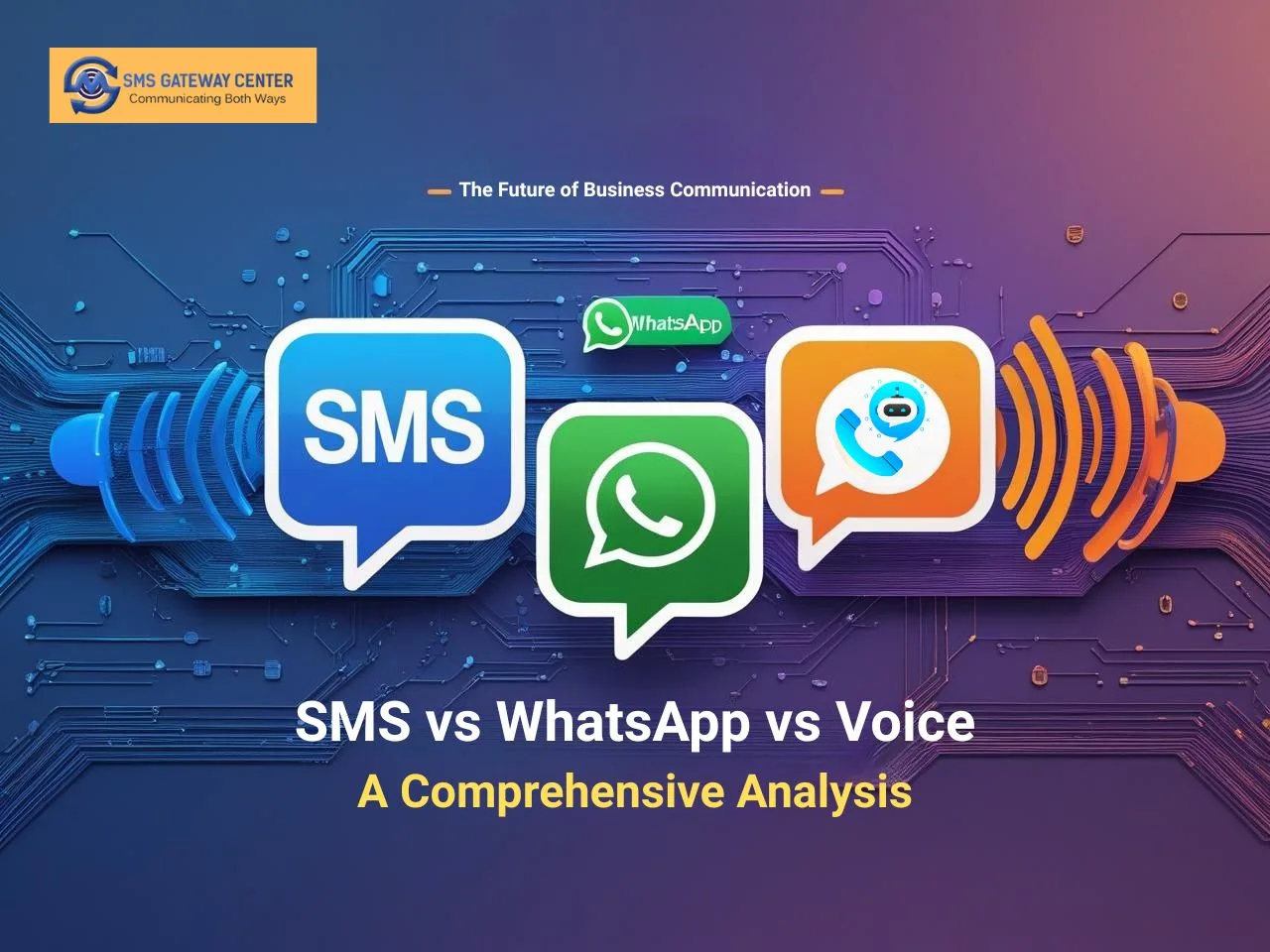
As we approach 2025, the communication landscape has transformed dramatically. Traditional SMS, once the undisputed king of business messaging, now competes with the rich features of WhatsApp Business API and the personal touch of voice calls. Understanding these channels’ strengths, limitations, and future trajectories is crucial for businesses looking to optimize their communication strategies.
This comprehensive analysis will explore industry trends, provide detailed cost-benefit comparisons, and offer practical implementation strategies to help you make informed decisions about your business communication future.
The Current State of Business Communication Channels
Bulk SMS: The Reliable Workhorse
Bulk SMS remains the backbone of business communication, with 98% open rates and near-instantaneous delivery. Despite the rise of messaging apps, SMS continues to thrive due to its universal accessibility and reliability.
Key Strengths:
- Universal reach: Works on every mobile device without internet
- High delivery rates: 98% of messages are read within 3 minutes
- Regulatory compliance: Well-established frameworks like DLT in India
- Cost-effective: Lower per-message costs for high-volume campaigns
- No app dependency: Recipients don’t need to install anything
Current Market Position:
SMS still dominates transactional communications, with businesses sending over 2.5 trillion SMS messages annually worldwide. In India alone, the SMS market is valued at over ₹2,500 crores, with SMSGatewayCenter leading the charge in reliable delivery.
WhatsApp Business API: The Rising Star
WhatsApp Business API has emerged as a powerful contender, offering rich media capabilities and interactive features that traditional SMS cannot match.
Key Strengths:
- Rich media support: Images, videos, documents, and interactive buttons
- Two-way communication: Natural conversation flow
- Verified business profiles: Builds trust with green checkmarks
- Global reach: 2.7 billion active users worldwide
- Advanced analytics: Detailed engagement metrics
Market Growth:
WhatsApp Business API adoption has grown 300% in the last two years, with businesses increasingly choosing it for customer support and marketing campaigns. The platform’s WhatsApp Business API integration capabilities make it an attractive option for modern businesses.
Voice Calls: The Personal Touch
Voice calls, including OBD (Outbound Dialing) and interactive voice response systems, offer the most personal form of communication.
Key Strengths:
- Personal connection: Human voice creates emotional bonds
- Complex interactions: Handle detailed conversations and queries
- Multi-language support: Reach diverse audiences effectively
- High engagement: 85% of calls are answered
- Immediate feedback: Real-time customer responses
Industry Applications:
Voice calls excel in scenarios requiring personal touch, such as appointment confirmations, customer support, and high-value sales conversations. Our Voice Call API solutions help businesses leverage this personal approach effectively.
Industry Trends and Predictions for 2025-2030
SMS: Evolution, Not Extinction
Prediction: SMS will continue to dominate transactional communications while evolving to support rich features.
Trends to Watch:
- RCS (Rich Communication Services): The next evolution of SMS, offering rich media capabilities
- A2P (Application-to-Person) growth: Business SMS volume expected to increase by 15% annually
- Enhanced security: Blockchain-based verification and end-to-end encryption
- AI integration: Smart routing and automated responses
Market Forecast:
By 2030, SMS will remain the primary channel for:
- OTP and authentication (95% market share)
- Transactional notifications (80% market share)
- Emergency alerts (90% market share)
WhatsApp Business API: Exponential Growth
Prediction: WhatsApp will become the dominant channel for customer engagement and support.
Growth Projections:
- User base: Expected to reach 3.5 billion by 2030
- Business adoption: 70% of businesses will integrate WhatsApp by 2027
- Revenue potential: $15 billion market by 2030
Emerging Trends:
- Conversational commerce: Direct shopping through chat
- AI-powered chatbots: 24/7 automated customer support
- Payment integration: In-chat transactions
- Video calling: Enhanced customer interactions
Voice Calls: Niche but Valuable
Prediction: Voice will become the premium channel for high-value interactions.
Market Evolution:
- Automation growth: 60% of voice interactions will be automated by 2027
- AI voice agents: Natural language processing for complex queries
- Personalization: Voice biometrics for enhanced security
- Integration: Seamless handoffs between channels
Cost-Benefit Analysis: Making the Right Choice
SMS Cost Analysis
Pricing Structure:
- Transactional SMS: ₹0.11-0.15 per message
- Promotional SMS: ₹0.08-0.12 per message
- Bulk SMS: ₹0.06-0.10 per message (volume discounts)
Cost Advantages:
- Lowest per-message cost for high-volume campaigns
- No setup fees for basic implementation
- Predictable pricing with minimal fluctuations
- No additional infrastructure required
ROI Metrics:
- Delivery rate: 98%
- Open rate: 98%
- Response rate: 6-8%
- Conversion rate: 2-4%
WhatsApp Business API Cost Analysis
Pricing Structure:
- Session messages: ₹0.14-0.18 per message
- Template messages: ₹0.12-0.16 per message
- Media messages: ₹0.20-0.25 per message
Cost Considerations:
- Higher per-message cost but richer engagement
- Setup fees: ₹5,000-15,000 for business verification
- Template approval: Time investment for compliance
- Infrastructure costs: API integration and maintenance
ROI Metrics:
- Delivery rate: 95%
- Open rate: 85%
- Response rate: 15-25%
- Conversion rate: 8-12%
Voice Call Cost Analysis
Pricing Structure:
- OBD calls: ₹0.20-0.30 per minute
- Interactive calls: ₹0.25-0.35 per minute
- Premium numbers: Additional setup costs
Cost Factors:
- Highest per-interaction cost but highest engagement
- Setup costs: ₹10,000-25,000 for premium numbers
- Infrastructure: IVR systems and call routing
- Human resources: For complex interactions
ROI Metrics:
- Answer rate: 85%
- Completion rate: 70%
- Response rate: 40-60%
- Conversion rate: 15-25%
Implementation Strategies for Each Channel
SMS Implementation Strategy
Phase 1: Foundation (Weeks 1-2)
- Choose a reliable SMS gateway like SMSGatewayCenter
- Set up DLT compliance for Indian markets
- Create message templates and get approvals
- Integrate with existing systems (CRM, ERP)
Phase 2: Optimization (Weeks 3-6)
- Implement A/B testing for message content
- Set up automated workflows for transactional messages
- Configure delivery reports and analytics
- Train staff on SMS best practices
Phase 3: Scaling (Weeks 7-12)
- Launch bulk campaigns with segmentation
- Implement personalization using customer data
- Set up retry mechanisms for failed deliveries
- Monitor and optimize performance metrics
Best Practices:
- Keep messages under 160 characters for single SMS
- Include clear call-to-action in every message
- Respect sending hours (9 AM to 8 PM for promotional)
- Provide easy opt-out mechanism
WhatsApp Business API Implementation Strategy
Phase 1: Setup (Weeks 1-4)
- Apply for business verification with Meta
- Set up WhatsApp Business API account
- Create and approve message templates
- Integrate with your CRM system
Phase 2: Launch (Weeks 5-8)
- Start with template messages for customer support
- Implement chatbot for common queries
- Set up automated responses and workflows
- Train customer service team
Phase 3: Enhancement (Weeks 9-16)
- Add rich media (images, videos, documents)
- Implement conversational commerce features
- Set up payment integration if applicable
- Launch marketing campaigns
Best Practices:
- Use conversational tone instead of formal language
- Respond within 24 hours to maintain messaging window
- Include media content to increase engagement
- Personalize messages using customer data
Voice Call Implementation Strategy
Phase 1: Infrastructure (Weeks 1-6)
- Choose voice service provider with good coverage
- Set up IVR system for automated responses
- Configure call routing and queuing
- Train agents on call handling procedures
Phase 2: Automation (Weeks 7-12)
- Implement automated calling for notifications
- Set up voice biometrics for security
- Create interactive voice responses for common queries
- Integrate with CRM for call tracking
Phase 3: Optimization (Weeks 13-20)
- Implement AI voice agents for complex queries
- Set up multi-language support if needed
- Optimize call timing based on customer preferences
- Launch high-value campaigns
Best Practices:
- Call during business hours for better answer rates
- Keep messages concise (30-60 seconds)
- Provide clear next steps in voice messages
- Follow up with SMS for important information
Omnichannel Strategy: The Future of Business Communication
Why Omnichannel Matters
The future belongs to businesses that can seamlessly integrate multiple communication channels. Customers expect to interact with brands through their preferred channels, and businesses must adapt accordingly.
Benefits of Omnichannel Approach:
- Higher customer satisfaction: 89% of customers prefer omnichannel experiences
- Increased engagement: 287% higher purchase rate with omnichannel customers
- Better retention: 91% of customers are more likely to stay with omnichannel brands
- Improved ROI: 23% higher revenue with omnichannel strategies
Implementation Framework
Step 1: Channel Assessment
- Audit current channels and their performance
- Identify customer preferences through surveys and analytics
- Map customer journey across all touchpoints
- Set channel-specific goals and KPIs
Step 2: Technology Integration
- Choose omnichannel platform that supports all channels
- Integrate with existing systems (CRM, ERP, marketing automation)
- Set up unified customer profiles across channels
- Implement cross-channel analytics and reporting
Step 3: Content Strategy
- Create channel-appropriate content for each platform
- Develop consistent messaging across all channels
- Implement personalization based on customer data
- Set up automated workflows for seamless handoffs
Step 4: Optimization
- Monitor performance across all channels
- A/B test content and timing for each channel
- Optimize based on customer feedback and behavior
- Scale successful strategies across channels
Channel Selection Matrix
| Use Case | Primary Channel | Secondary Channel | Tertiary Channel |
|---|---|---|---|
| OTP/Authentication | SMS | Voice | |
| Order Updates | SMS | ||
| Customer Support | Voice | SMS | |
| Marketing Campaigns | SMS | ||
| Appointment Reminders | SMS | Voice | |
| High-Value Sales | Voice | SMS |
Technology Integration and Automation
API-First Approach
Modern businesses need APIs that can handle multiple communication channels seamlessly. SMSGatewayCenter’s unified API provides access to SMS, WhatsApp, and Voice services through a single integration.
Key Features:
- Unified dashboard for all communication channels
- Single API key for multiple services
- Consistent response format across channels
- Built-in retry mechanisms and error handling
Automation Workflows
Transactional Automation:
- Order confirmation: SMS immediately, WhatsApp follow-up
- Shipping updates: SMS for tracking, WhatsApp for details
- Delivery confirmation: SMS notification, WhatsApp for feedback
Marketing Automation:
- Welcome series: WhatsApp introduction, SMS for quick actions
- Abandoned cart: SMS reminder, WhatsApp for assistance
- Re-engagement: Voice call for high-value customers
Support Automation:
- Initial query: WhatsApp for quick responses
- Complex issues: Voice call escalation
- Resolution follow-up: SMS confirmation
AI and Machine Learning Integration
Predictive Analytics:
- Optimal send times for each channel and customer
- Content optimization based on historical performance
- Channel preference prediction for individual customers
- Churn prediction and prevention strategies
Smart Routing:
- Automatic channel selection based on message type and customer preference
- Intelligent retry logic across channels
- Load balancing between multiple providers
- Cost optimization through dynamic channel selection
Compliance and Regulatory Considerations
SMS Compliance
India (TRAI DLT):
- Header registration with approved DLT platforms
- Template approval for all message types
- Consent management with proper opt-in records
- Regular reporting to TRAI as required
Global Compliance:
- GDPR (Europe): Strict consent and data protection
- TCPA (USA): Prior express consent required
- CASL (Canada): Similar consent requirements
WhatsApp Business API Compliance
Meta Requirements:
- Business verification and approval process
- Template message approval for all content
- 24-hour messaging window for customer-initiated conversations
- Opt-out management and respect for user preferences
Best Practices:
- Clear business identification in all messages
- Transparent opt-out process for users
- Respect for messaging hours and frequency limits
- Regular compliance audits and updates
Voice Call Compliance
Do Not Call (DNC) Compliance:
- DNC list scrubbing before calling
- Proper identification at the beginning of calls
- Opt-out mechanism during calls
- Record keeping for compliance audits
International Considerations:
- Country-specific regulations for automated calling
- Time zone restrictions for outbound calls
- Language requirements for international markets
- Local number requirements for better answer rates
Measuring Success: KPIs and Analytics
Channel-Specific Metrics
SMS Metrics:
- Delivery rate: Target 98%+
- Open rate: Target 98%+
- Response rate: Target 6-8%
- Opt-out rate: Keep under 2%
WhatsApp Metrics:
- Delivery rate: Target 95%+
- Open rate: Target 85%+
- Response rate: Target 15-25%
- Conversation rate: Target 8-12%
Voice Metrics:
- Answer rate: Target 85%+
- Completion rate: Target 70%+
- Response rate: Target 40-60%
- Satisfaction score: Target 4.5/5
Cross-Channel Analytics
Unified Dashboard:
- Channel performance comparison in real-time
- Customer journey tracking across channels
- ROI analysis by channel and campaign
- Predictive insights for optimization
Key Performance Indicators:
- Customer lifetime value by channel
- Channel preference and usage patterns
- Cross-channel engagement rates
- Cost per acquisition by channel
Optimization Strategies
A/B Testing Framework:
- Message content testing across channels
- Send time optimization for each channel
- Channel combination testing for omnichannel campaigns
- Personalization level testing
Continuous Improvement:
- Weekly performance reviews and adjustments
- Monthly strategy updates based on data
- Quarterly technology assessments and upgrades
- Annual compliance audits and updates
Future Predictions and Recommendations
2025-2027: The Hybrid Era
Prediction: Businesses will adopt hybrid strategies, using multiple channels based on use case and customer preference.
Recommendations:
- Start with SMS for transactional communications
- Add WhatsApp for customer support and engagement
- Use Voice for high-value interactions and complex queries
- Implement omnichannel strategies gradually
2028-2030: AI-Driven Personalization
Prediction: AI will drive hyper-personalized communication strategies across all channels.
Preparation Steps:
- Invest in AI capabilities for predictive analytics
- Build comprehensive customer profiles across channels
- Implement real-time personalization engines
- Develop adaptive content strategies
Long-term Vision: Seamless Integration
Prediction: Communication channels will become invisible to customers, with seamless handoffs and consistent experiences.
Strategic Focus:
- Unified customer experience across all touchpoints
- Real-time channel optimization based on context
- Predictive customer journey mapping
- Automated optimization of communication strategies
Conclusion: Making the Right Choice for Your Business
The future of business communication is not about choosing one channel over another, but about creating a comprehensive strategy that leverages the strengths of each channel. Bulk SMS, WhatsApp Business API, and Voice calls each have their place in a modern business communication strategy.
Key Takeaways:
- SMS remains essential for transactional communications and universal reach
- WhatsApp Business API is growing rapidly and offers rich engagement opportunities
- Voice calls provide the personal touch needed for high-value interactions
- Omnichannel strategies deliver the best results and customer satisfaction
- Technology integration is crucial for seamless customer experiences
Next Steps:
- Assess your current communication strategy and identify gaps
- Choose the right channels based on your business needs and customer preferences
- Implement a phased approach to avoid overwhelming your team and customers
- Invest in the right technology to support your omnichannel strategy
- Measure and optimize continuously based on performance data
The businesses that succeed in the future will be those that can adapt their communication strategies to meet changing customer expectations while maintaining the personal touch that builds lasting relationships.
Resources and Further Reading
- How to Implement Two-Factor Authentication with SMS: Complete 2025 Guide
- Building a Bulk SMS Campaign System from Scratch: A Complete Technical Guide
- SMS Marketing Compliance: A Complete Guide for 2025
- DLT Compliance Guide
- WhatsApp Business API Use Cases
Ready to transform your business communication strategy? Contact SMSGatewayCenter today for expert guidance on implementing the right mix of SMS, WhatsApp, and Voice solutions for your business needs.