What Are Transactional and Promotional SMS?
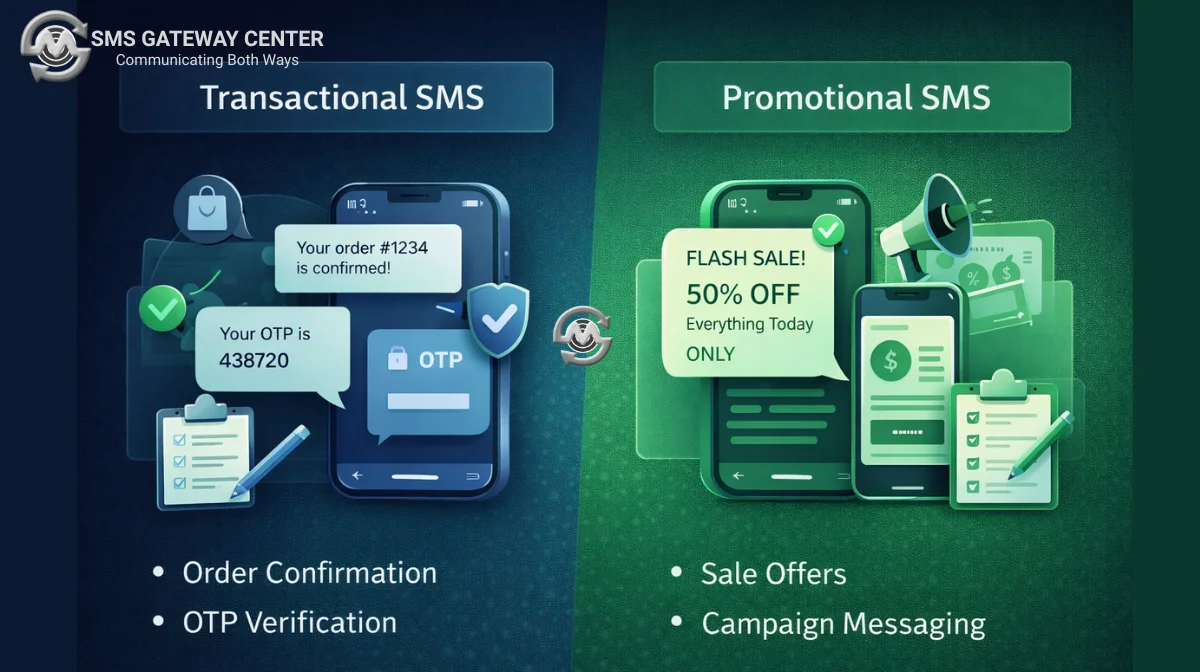
Transactional SMS are triggered by a user action or event. They support an existing relationship or transaction. Examples: order confirmation, OTP, password reset, appointment reminder, shipping update, account alert. Carriers and regulators treat them as “service” messages, so they usually have fewer marketing restrictions and often bypass DND (Do Not Disturb) in regions where that applies. Promotional SMS are sent to market a product, offer, or brand. Examples: sale announcements, flash deals, new product launches, event invites, loyalty rewards, re-engagement campaigns. These are treated as marketing and must follow consent, opt-out, and content rules in each country.Knowing which type you are sending is the first step to compliant bulk SMS and better delivery.
When to Use Each SMS Type
When to Use Transactional SMS
Use transactional SMS when:
- The message is part of a process the user started. Sign-up OTP, password reset, payment confirmation, booking confirmation.
- Timing is critical. Alerts, fraud warnings, delivery status, appointment reminders.
- You are not selling. You are informing or securing an existing transaction or account.
Transactional messages work best when sent immediately after the trigger event. A delay can confuse users and hurt trust. Using a dedicated SMS API for transactional flows helps you send in real time and track delivery with DLR webhooks.
When to Use Promotional SMS
Use promotional SMS when:
- The goal is marketing. Driving traffic, sales, sign-ups, or engagement.
- The message is not tied to a single user action. Broadcasts, segments, campaigns.
- You have explicit marketing consent. User opted in to receive offers and promotions.
Promotional SMS should be sent in line with user preferences (frequency, timing) and always include a clear opt-out. Segmenting your list and respecting DND and local rules improves delivery and keeps you compliant.
Mixing Both: Transactional + Promotional
Some messages mix service and marketing (e.g., “Your order is shipped. Use code SAVE10 for your next purchase.”). Many regulators treat hybrid messages as promotional, so they must meet marketing consent and opt-out rules. To avoid risk, keep transactional content separate from promotional content, or send two distinct messages if you need both.
Template Management Strategies
Good template management keeps messaging consistent, compliant, and easy to scale.
Centralize and Version Templates
Store approved SMS templates in one place (e.g., your SMS gateway or CRM). Use clear names and versions so marketing and dev teams use the same, up-to-date copy. Avoid ad-hoc wording in code or spreadsheets.
Use Variables, Not Free-Form Text
Templates should use placeholders for dynamic data (name, OTP, order ID, link). That way:
- Content stays within character limits.
- Required elements (opt-out, sender ID, disclaimer) are always present.
- Less chance of last-minute typos or non-compliant wording.
Example: “Hi {{name}}, your OTP is {{otp}}. Valid for 10 min.”
Separate Transactional and Promotional Templates
Maintain different template sets for transactional vs promotional. Transactional templates: short, clear, no marketing language. Promotional templates: include opt-out wording, sender/brand name, and any mandatory disclaimers. This separation makes compliance checks and audits easier.
Review and Refresh Regularly
Review templates when:
- Laws or carrier policies change (e.g., consent, DND, content rules).
- You add new flows (e.g., new OTP or campaign type).
- There are deliverability or complaint issues.
Document which template is used for which use case and which SMS type (transactional vs promotional) so onboarding and support stay aligned.
Compliance Requirements
Compliance depends on region and message type. Below are common themes; always confirm with local legal and your provider.
Consent and Purpose
- Transactional: Often allowed based on business relationship or user action (e.g., they requested OTP or order updates). Some regions still require prior consent for service messages; check local rules.
- Promotional: Requires explicit opt-in for marketing. Record consent (source, time, scope) and honor preferences (topics, frequency).
Opt-Out (Unsubscribe)
- Promotional: Must offer a simple, free way to opt out (e.g., “Reply STOP to unsubscribe”). Process opt-outs immediately and suppress numbers from future marketing.
- Transactional: Opt-out is less often required for pure service messages, but if you add any promotional line, treat the message as promotional and include opt-out.
Content and Sender ID
- No deceptive or misleading content; identify your brand/sender.
- Follow carrier and regulatory rules on prohibited content (e.g., gambling, alcohol, adult) and use of sender IDs (alphabetic vs numeric).
- In some countries, promotional SMS may need prior registration or use of specific routes; check with your SMS provider for your target countries.
DND and Time Windows
- In regions with DND (e.g., India), promotional SMS to DND numbers are restricted; transactional may be allowed under “service” category.
- Respect quiet hours where required (e.g., no promotional SMS at night). Transactional alerts may have different or relaxed time rules; verify per country.
Record-Keeping
Keep records of consent, opt-outs, message content, and timestamps. This helps during audits and when resolving complaints or carrier disputes.
Summary
- Transactional SMS = service messages tied to a user action or relationship; use for OTP, confirmations, alerts, reminders.
- Promotional SMS = marketing messages; use only with clear consent and always with opt-out.
- Template management: Centralize, use variables, separate transactional vs promotional, and review regularly.
- Compliance: Get the right consent, provide easy opt-out, follow content and sender rules, respect DND and time windows, and keep records.
Choosing the right SMS type and managing templates and compliance will improve deliverability, reduce risk, and make your bulk SMS and API usage more effective. If you need help classifying your use case or setting up templates and compliance for your region, your SMS gateway provider can guide you through the options for your traffic.