Whether you’re running promotional SMS campaigns or sending transactional alerts, understanding how to organize your contacts, segment your audience, and optimize for engagement will dramatically improve your campaign performance. This comprehensive guide will walk you through each aspect, providing practical strategies and best practices that you can implement immediately.
The Foundation: Understanding Group SMS Campaigns
Group SMS campaigns allow businesses to send messages to multiple recipients simultaneously by organizing contacts into groups. Unlike individual messaging, which requires sending one message at a time, group campaigns enable efficient communication with hundreds or thousands of contacts at once. However, the real power of group SMS lies not in the ability to send to many people, but in the ability to send the right message to the right people.
Effective group SMS campaigns are built on three pillars:
- Phonebook Management: Organizing and maintaining your contact database
- Campaign Segmentation: Dividing your audience into targeted groups
- Engagement Optimization: Maximizing response rates and campaign effectiveness
Each of these components works together to create campaigns that resonate with recipients, drive action, and deliver measurable results. Let’s explore each in detail.
Phonebook Management: Building a Solid Foundation
Your phonebook is the foundation of all your SMS campaigns. Without proper organization and maintenance, even the best messaging strategy will fall short. Effective phonebook management ensures that your contact database is accurate, up-to-date, and organized in ways that support targeted messaging.
Creating and Organizing Contact Groups
The first step in effective phonebook management is creating logical, meaningful groups. These groups should reflect how you want to communicate with different segments of your audience. Common grouping strategies include:
Demographic Segmentation:
- Age groups (18-25, 26-35, 36-45, etc.)
- Geographic locations (cities, states, regions)
- Gender-based groups (when relevant to your messaging)
Behavioral Segmentation:
- Purchase history (frequent buyers, occasional customers, one-time purchasers)
- Engagement levels (highly engaged, moderately engaged, inactive)
- Product preferences (specific product categories or services)
Relationship-Based Segmentation:
- Customer lifecycle stage (new customers, regular customers, VIP customers)
- Account type (individual, business, premium)
- Subscription status (active subscribers, trial users, expired)
Campaign-Specific Groups:
- Event attendees
- Newsletter subscribers
- Contest participants
- Feedback respondents
Best Practices for Contact Organization
1. Use Clear, Descriptive Group Names
Group names should be immediately understandable to anyone on your team. Instead of generic names like “Group 1” or “List A,” use descriptive names like “Mumbai Premium Customers” or “E-commerce High-Value Buyers.” This makes it easier to select the right groups when creating campaigns and helps prevent sending messages to the wrong audience.
2. Implement Hierarchical Grouping
For businesses with large contact databases, hierarchical grouping provides better organization. Create parent groups (e.g., “Customers”) with sub-groups (e.g., “Customers – Mumbai,” “Customers – Delhi”). This structure makes it easier to manage large databases and allows for both broad and targeted campaigns.
3. Maintain Group Hygiene
Regular maintenance of your contact groups is essential for campaign effectiveness:
- Remove Inactive Contacts: Periodically review and remove contacts who haven’t engaged in a long time
- Update Contact Information: Keep phone numbers, names, and other details current
- Merge Duplicate Groups: Consolidate similar groups to avoid confusion
- Archive Old Groups: Move inactive or completed campaign groups to an archive
4. Tag Contacts for Multiple Groups
Contacts can belong to multiple groups simultaneously. A customer might be in “Premium Customers,” “Mumbai Location,” and “E-commerce Buyers” groups. This flexibility allows you to create highly targeted campaigns by selecting multiple groups that intersect to define your exact audience.
Data Quality Management
The quality of your contact data directly impacts campaign success. Poor data quality leads to:
- Failed deliveries due to invalid numbers
- Wasted credits on undeliverable messages
- Lower engagement rates
- Compliance issues with invalid contacts
Phone Number Validation:
- Verify phone numbers are in correct format (with country codes when needed)
- Remove obviously invalid numbers (too short, too long, non-numeric characters)
- Standardize formats across your database
- Regularly validate against carrier databases
Contact Information Enrichment:
- Collect additional data points when possible (name, location, preferences)
- Use data from other sources to enrich contact profiles
- Maintain opt-in records for compliance
- Track engagement history for each contact
Duplicate Management:
- Identify and merge duplicate contacts
- Use unique identifiers (phone numbers) to prevent duplicates
- Regularly audit your database for duplicates
- Implement automated duplicate detection during imports
Integration with Other Systems
Modern businesses use multiple systems to manage customer data. Effective phonebook management integrates with these systems:
CRM Integration:
- Sync contacts from your CRM to SMS groups
- Automatically update groups based on CRM data changes
- Maintain bidirectional data flow when possible
E-commerce Integration:
- Import customer lists from online stores
- Create groups based on purchase behavior
- Sync order and transaction data for personalization
Marketing Automation:
- Connect SMS groups with email marketing segments
- Coordinate multi-channel campaigns
- Share engagement data across platforms
At SMS Gateway Center, our platform supports easy import and export of contact data, making it simple to maintain your phonebook across different systems and ensuring your groups stay current with your business data.
Campaign Segmentation: Reaching the Right Audience
Segmentation is the process of dividing your audience into smaller, more targeted groups based on shared characteristics. Effective segmentation ensures that each recipient receives messages that are relevant to their interests, needs, and preferences, dramatically improving engagement rates and campaign effectiveness.
Why Segmentation Matters
Sending the same message to everyone in your database is like shouting in a crowded room and hoping the right people hear you. Segmentation allows you to whisper directly to the people who want to hear what you have to say. The benefits are clear:
Higher Engagement Rates:
- Targeted messages are more relevant to recipients
- Relevant messages are more likely to be read and acted upon
- Higher engagement leads to better campaign ROI
Improved Customer Experience:
- Customers receive messages that matter to them
- Reduced message fatigue from irrelevant communications
- Better perception of your brand
Better Campaign Performance:
- Higher conversion rates from targeted campaigns
- Lower opt-out rates
- More efficient use of SMS credits
Compliance Benefits:
- Easier to respect DND preferences
- Better alignment with customer consent
- Reduced risk of spam complaints
Segmentation Strategies
1. Geographic Segmentation
Geographic segmentation divides your audience based on location. This is particularly valuable for:
- Local businesses targeting nearby customers
- Regional promotions and offers
- Event invitations for specific locations
- Weather or location-specific alerts
- Compliance with local regulations (time zones, language preferences)
Example Use Cases:
- A restaurant chain sending lunch specials to customers in Mumbai
- An e-commerce company offering region-specific delivery options
- A service provider sending location-based appointment reminders
2. Demographic Segmentation
Demographic segmentation uses characteristics like age, gender, income, education, and occupation to create targeted groups. This approach works well when:
- Products or services appeal to specific demographics
- Messaging needs to be tailored to age groups
- Cultural or language preferences vary by demographics
Example Use Cases:
- A fashion brand targeting different age groups with age-appropriate styles
- An educational institution sending course information to specific age demographics
- A financial services company segmenting by income levels
3. Behavioral Segmentation
Behavioral segmentation is based on how customers interact with your business. This is often the most effective segmentation strategy because it’s based on actual actions rather than assumptions. Key behavioral indicators include:
- Purchase frequency and recency
- Average order value
- Product categories purchased
- Engagement with previous campaigns
- Website browsing behavior
- App usage patterns
Example Use Cases:
- Sending special offers to customers who haven’t purchased in 90 days
- Targeting high-value customers with premium product launches
- Re-engaging customers who opened but didn’t click previous messages
4. Psychographic Segmentation
Psychographic segmentation considers customers’ values, interests, lifestyles, and personality traits. While more complex to implement, this approach can create highly engaged groups:
- Lifestyle preferences (health-conscious, tech-savvy, eco-friendly)
- Values and beliefs
- Interests and hobbies
- Personality traits
Example Use Cases:
- A fitness brand targeting health-conscious customers
- An eco-friendly product line targeting environmentally conscious consumers
- A luxury brand targeting customers who value premium experiences
5. Lifecycle Stage Segmentation
Lifecycle segmentation divides customers based on where they are in their relationship with your business:
- New Customers: Welcome messages, onboarding information, first purchase incentives
- Active Customers: Regular promotions, loyalty rewards, product updates
- At-Risk Customers: Re-engagement campaigns, special offers, feedback requests
- VIP Customers: Exclusive offers, early access, premium content
Example Use Cases:
- Welcome series for new subscribers
- Re-engagement campaigns for inactive customers
- Exclusive offers for long-term customers
Advanced Segmentation Techniques
Multi-Dimensional Segmentation:
Combine multiple segmentation criteria to create highly targeted groups. For example:
- “Mumbai-based customers who purchased electronics in the last 30 days”
- “Female customers aged 25-35 who engaged with fashion campaigns”
- “Premium subscribers in Delhi who haven’t purchased in 60 days”
Dynamic Segmentation:
Use rules-based systems to automatically update group membership based on behavior:
- Automatically add customers to “High-Value” group when order value exceeds threshold
- Move customers to “Inactive” group after 90 days of no engagement
- Update location groups when customers change addresses
Predictive Segmentation:
Use data analytics to predict which customers are most likely to engage:
- Identify customers likely to make a purchase
- Predict which customers might churn
- Forecast engagement levels for different segments
Implementing Segmentation in Your Campaigns
Step 1: Analyze Your Data
Before creating segments, analyze your existing contact data to identify patterns:
- Review purchase history and identify trends
- Analyze engagement with previous campaigns
- Identify common characteristics of your best customers
- Look for natural groupings in your data
Step 2: Define Segment Criteria
Based on your analysis, define clear criteria for each segment:
- Create segment definitions that are specific and measurable
- Ensure segments are large enough to be meaningful but small enough to be targeted
- Avoid creating too many segments that become difficult to manage
Step 3: Create and Populate Segments
Use your SMS platform’s grouping features to create segments:
- Create groups based on your defined criteria
- Populate groups manually or through automated rules
- Test segment sizes and adjust as needed
Step 4: Develop Segment-Specific Messaging
Create messages tailored to each segment:
- Use language and tone appropriate for each segment
- Highlight benefits relevant to segment interests
- Include offers and calls-to-action that resonate with the segment
Step 5: Test and Refine
Continuously test and refine your segmentation:
- A/B test different segment definitions
- Compare engagement rates across segments
- Adjust criteria based on performance data
- Merge or split segments as needed
Engagement Optimization: Maximizing Campaign Effectiveness
Engagement optimization focuses on improving how recipients interact with your SMS campaigns. High engagement rates indicate that your messages are relevant, timely, and valuable to recipients, leading to better campaign results and stronger customer relationships.
Understanding Engagement Metrics
Before optimizing engagement, you need to understand what engagement means and how to measure it:
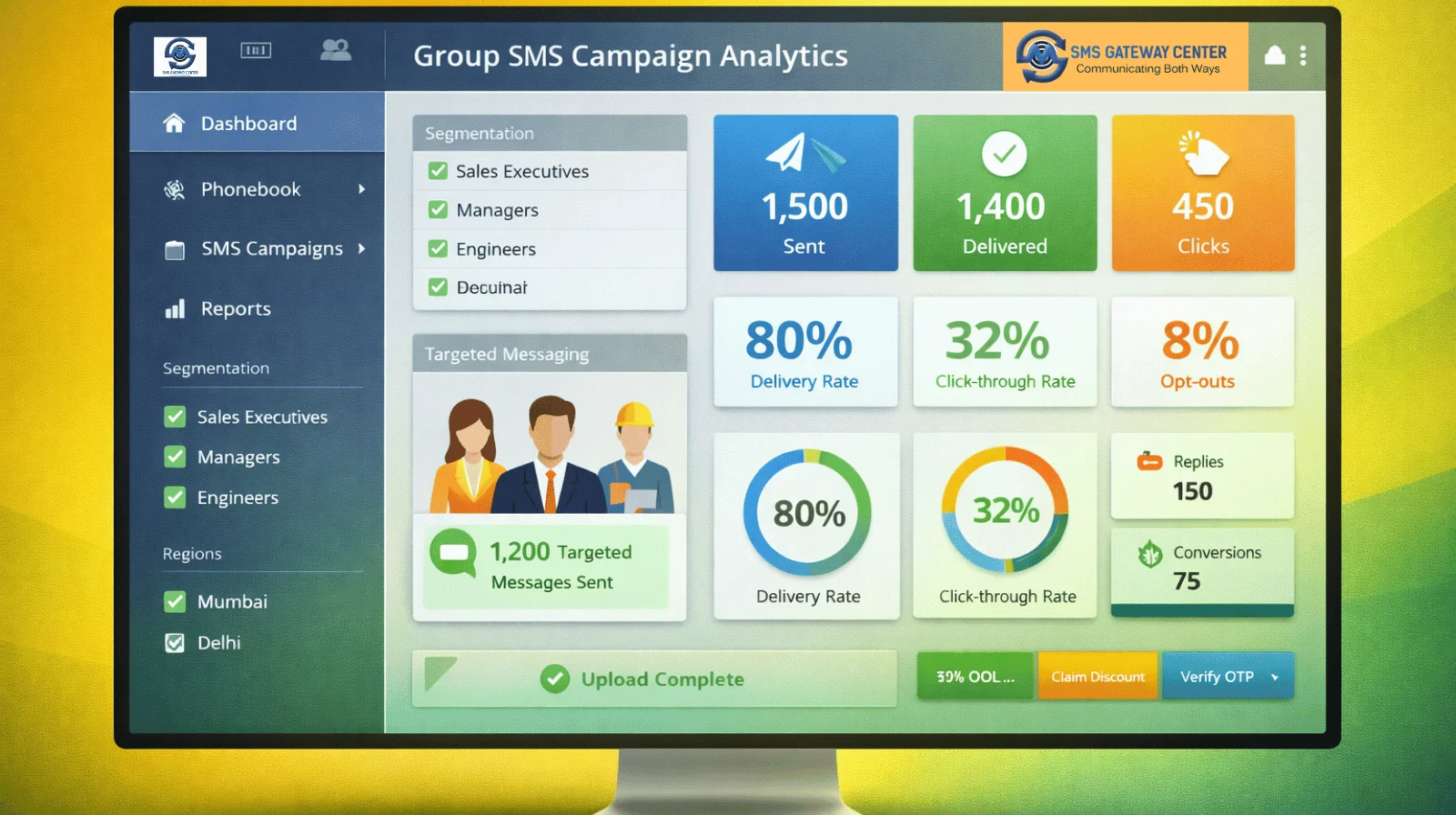
Delivery Rate:
- Percentage of messages successfully delivered
- Indicates data quality and network connectivity
- Target: 95%+ delivery rate
Open Rate (for messages with links):
- Percentage of delivered messages that were opened
- Indicates initial interest and message relevance
- Target: Varies by industry, but 20%+ is generally good
Click-Through Rate (CTR):
- Percentage of recipients who clicked links in messages
- Indicates strong interest and effective calls-to-action
- Target: 5-10%+ depending on campaign type
Response Rate:
- Percentage of recipients who replied to messages
- Indicates two-way engagement and conversation
- Target: 2-5%+ for campaigns encouraging responses
Conversion Rate:
- Percentage of recipients who completed desired action
- Indicates campaign effectiveness in driving business goals
- Target: Varies by campaign objective
Opt-Out Rate:
- Percentage of recipients who unsubscribed
- Indicates message relevance and frequency issues
- Target: Less than 0.5% per campaign
Message Content Optimization
The content of your messages is the primary driver of engagement. Optimizing message content requires attention to several factors:
1. Personalization
Personalized messages significantly outperform generic messages. Personalization can include:
- Using recipient names in messages
- Referencing past purchases or interactions
- Mentioning location-specific information
- Including relevant product recommendations
Example:
- Generic: “Check out our new products!”
- Personalized: “Hi Priya, based on your recent purchase, you might like our new collection. View now: [link]”
2. Clear Value Proposition
Every message should clearly communicate value to the recipient:
- Lead with the benefit, not the feature
- Be specific about what the recipient gains
- Use compelling language that creates interest
- Include urgency when appropriate (but avoid false urgency)
3. Strong Call-to-Action (CTA)
Every message should include a clear, actionable next step:
- Use action verbs (Shop, Claim, Register, Download)
- Make the action easy to complete
- Create urgency when appropriate
- Test different CTAs to find what works best
4. Message Length Optimization
SMS messages have character limits, and shorter messages often perform better:
- Keep messages concise and focused
- Use abbreviations when appropriate (but maintain clarity)
- Prioritize the most important information
- Consider multi-part messages for longer content
5. Timing Optimization
When you send messages significantly impacts engagement:
Best Times to Send:
- Weekday mornings (9-11 AM) for business communications
- Lunch hours (12-2 PM) for promotional messages
- Early evenings (6-8 PM) for consumer campaigns
- Avoid early mornings (before 9 AM) and late nights (after 9 PM)
Day of Week Considerations:
- Weekdays generally perform better than weekends
- Tuesday-Thursday often show highest engagement
- Monday mornings can be effective for business messages
- Friday afternoons work well for weekend promotions
Time Zone Considerations:
- Send messages in recipients’ local time zones
- Respect time zone differences for national campaigns
- Consider regional preferences and habits
Frequency Optimization
Finding the right balance in message frequency is crucial:
Too Frequent:
- Leads to message fatigue
- Increases opt-out rates
- Reduces engagement over time
- Damages brand perception
Too Infrequent:
- Misses opportunities for engagement
- Allows competitors to capture attention
- Reduces brand recall
- Limits relationship building
Optimal Frequency:
- Transactional messages: As needed (order updates, alerts)
- Promotional messages: 2-4 times per month
- Newsletter/updates: Weekly or bi-weekly
- Re-engagement: Monthly for inactive customers
A/B Testing for Engagement
Systematic testing helps identify what works best for your audience:
What to Test:
- Message content and tone
- Call-to-action wording
- Send times and days
- Personalization levels
- Offer types and values
- Message length
How to Test:
- Test one variable at a time for clear results
- Use statistically significant sample sizes
- Run tests for sufficient duration
- Document results and learnings
- Apply winning elements to future campaigns
Re-engagement Strategies
Not all contacts will engage immediately. Re-engagement strategies help bring inactive contacts back:
1. Identify Inactive Contacts:
- Define inactivity (no opens, clicks, or purchases in X days)
- Segment inactive contacts separately
- Analyze why they might have become inactive
2. Re-engagement Campaigns:
- Send special offers to inactive contacts
- Ask for feedback on why they disengaged
- Provide value through useful information
- Offer easy opt-out if they’re no longer interested
3. Win-Back Offers:
- Exclusive discounts for returning customers
- “We miss you” messaging with special incentives
- Limited-time offers to create urgency
- Personalized recommendations based on past behavior
Measuring and Improving Engagement
Continuous measurement and improvement are essential:
Regular Reporting:
- Track engagement metrics for every campaign
- Compare performance across segments
- Identify trends and patterns
- Set benchmarks and goals
Analysis and Insights:
- Identify what’s working and what’s not
- Understand why certain segments perform better
- Discover optimal send times and frequencies
- Learn from both successes and failures
Continuous Optimization:
- Apply learnings to future campaigns
- Test new strategies regularly
- Refine segmentation based on engagement data
- Adjust messaging based on performance
Integrating Phonebook Management, Segmentation, and Engagement
The real power of group SMS campaigns comes from integrating all three components. Here’s how they work together:
1. Well-Managed Phonebooks Enable Effective Segmentation
A clean, organized phonebook with accurate data makes it easy to create meaningful segments. Without good phonebook management, segmentation becomes difficult or impossible.
2. Effective Segmentation Improves Engagement
Sending targeted messages to well-defined segments naturally improves engagement because messages are more relevant to recipients.
3. Engagement Data Informs Phonebook Management
Engagement metrics help you identify which contacts are active and which should be removed or re-engaged, improving your phonebook quality over time.
4. Engagement Insights Refine Segmentation
Understanding what engages different segments helps you create better segments and more targeted messaging in the future.
Best Practices for Group SMS Campaign Success
1. Start with Clean Data
Before launching any campaign, ensure your phonebook is clean and well-organized. Remove invalid numbers, update contact information, and organize contacts into logical groups.
2. Segment Thoughtfully
Don’t create segments just for the sake of segmentation. Each segment should have a clear purpose and receive messages that are meaningfully different from other segments.
3. Personalize When Possible
Use available data to personalize messages. Even simple personalization like using names can significantly improve engagement.
4. Test Continuously
Never assume you know what works best. Continuously test different approaches and apply learnings to improve future campaigns.
5. Monitor and Adjust
Regularly review campaign performance and adjust your strategy based on results. What worked last month might not work this month.
6. Respect Preferences
Always respect DND preferences, opt-out requests, and consent. Compliance is not just a legal requirement; it’s essential for maintaining trust and engagement.
7. Provide Value
Every message should provide value to the recipient. Whether it’s useful information, a special offer, or important updates, recipients should feel that receiving your messages is beneficial.
Conclusion: Building Successful Group SMS Campaigns
Group SMS campaigns offer incredible potential for businesses to connect with their audiences, but success requires more than just sending messages to groups. Effective phonebook management ensures you have the right data to work with. Strategic segmentation ensures you’re reaching the right people with the right messages. Engagement optimization ensures your messages resonate and drive action.
By mastering these three components and integrating them effectively, you can create group SMS campaigns that not only reach your audience but truly engage them, driving measurable results for your business. Whether you’re sending promotional campaigns, transactional alerts, or personalized messages, these principles will help you maximize engagement and achieve your campaign objectives.
Remember, successful group SMS campaigns are built on a foundation of good data management, executed through thoughtful segmentation, and optimized for maximum engagement. Start with these fundamentals, measure your results, learn from your experiences, and continuously refine your approach. With time and practice, you’ll develop group SMS campaigns that consistently deliver exceptional results.
For more information about bulk SMS services, SMS API integration, or campaign management tools, visit SMS Gateway Center or contact our support team. We’re here to help you build successful SMS campaigns that engage your audience and drive your business forward.
Recent Articles:
NCPR Scrubbing & Spam Filtering: Staying Compliant in India’s SMS Ecosystem
Bulk SMS File Upload: Supporting Multiple Formats for Maximum Flexibility
Take Control of Your Account Security: Manage All Your Connected Devices