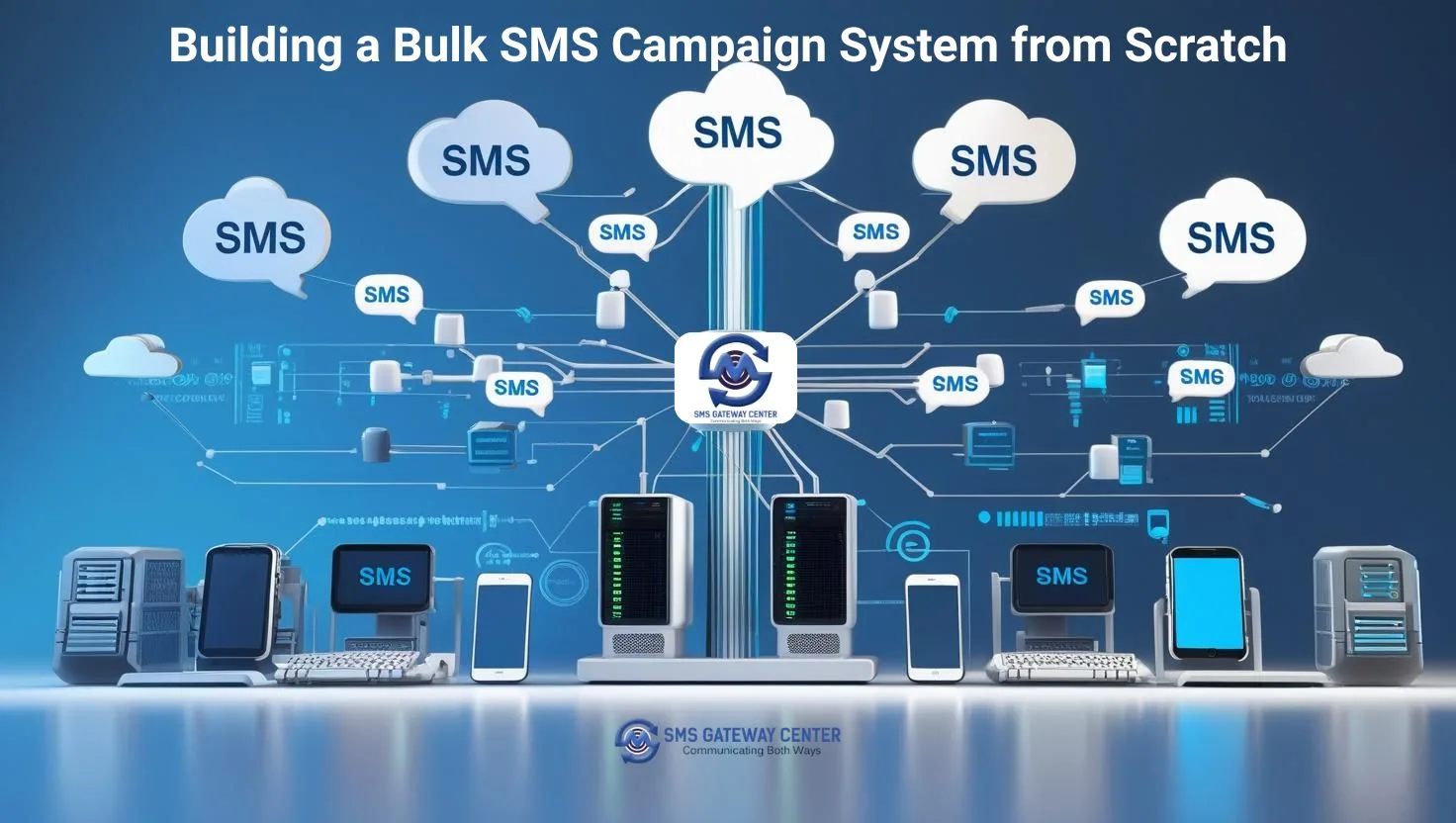
This comprehensive guide will walk you through the essential components, technical architecture, and performance optimization strategies needed to create a robust bulk SMS campaign system that can handle millions of messages while maintaining high delivery rates and compliance standards.
Why Build Your Own Bulk SMS System?
Before diving into the technical details, let’s understand why businesses choose to build their own SMS infrastructure:
1. Cost Control
Building your own system eliminates per-message costs from third-party providers. While you’ll need to invest in infrastructure initially, the long-term savings can be substantial for high-volume senders.
2. Customization
Your system can be tailored to specific business needs, integrating seamlessly with existing CRM systems, marketing automation platforms, and customer databases.
3. Data Ownership
You maintain complete control over customer data, ensuring compliance with privacy regulations like GDPR and avoiding third-party data sharing concerns.
4. Scalability
Custom systems can be designed to handle your exact volume requirements, from thousands to millions of messages per day.
Core Components of a Bulk SMS Campaign System
1. Message Queue Management
The heart of any bulk SMS system is its queue management. This component handles:
- Message prioritization (urgent vs. promotional messages)
- Rate limiting to comply with carrier restrictions
- Retry mechanisms for failed deliveries
- Load balancing across multiple gateways
2. Gateway Integration Layer
Your system needs to connect with multiple SMS gateways for redundancy and cost optimization:
- Primary gateway for high-priority messages
- Secondary gateways for backup and cost optimization
- Gateway health monitoring to detect and switch from failing providers
- Delivery status tracking across all gateways
3. Campaign Management Engine
This component handles the business logic of SMS campaigns:
- Template management with personalization variables
- Audience segmentation based on demographics, behavior, or preferences
- Scheduling and automation for time-sensitive campaigns
- A/B testing capabilities for message optimization
4. Compliance and Security Module
Critical for maintaining legal compliance and protecting customer data:
- DLT compliance for Indian markets (TRAI regulations)
- Opt-in/opt-out management with proper consent tracking
- Data encryption for sensitive customer information
- Audit trails for regulatory compliance
Technical Architecture Overview
Microservices Architecture
Modern bulk SMS systems typically use a microservices approach:
API Gateway Service
- Handles incoming requests from web applications
- Manages authentication and rate limiting
- Routes requests to appropriate microservices
Campaign Service
- Manages campaign creation and scheduling
- Handles audience segmentation
- Processes campaign analytics
Queue Service
- Manages message queues and prioritization
- Handles message routing to appropriate gateways
- Implements retry logic and dead letter queues
Gateway Service
- Manages connections to multiple SMS gateways
- Handles gateway health monitoring
- Processes delivery receipts and status updates
Analytics Service
- Tracks delivery rates, open rates, and engagement metrics
- Generates reports and insights
- Provides real-time dashboard data
Data Storage Strategy
Your system will need multiple types of storage:
- Relational Database: For user data, campaigns, and transactional records
- NoSQL Database: For high-volume message logs and analytics
- Cache Layer: For frequently accessed data like user preferences and templates
- Message Queue: For handling high-volume message processing
Performance Optimization Strategies
1. Horizontal Scaling
Design your system to scale horizontally by adding more instances of each service. This approach allows you to handle increased load without redesigning the architecture.
2. Asynchronous Processing
Use message queues to decouple message sending from the main application flow. This prevents timeouts and improves user experience while allowing for better error handling.
3. Connection Pooling
Maintain persistent connections to SMS gateways to reduce connection overhead and improve throughput.
4. Caching Strategy
Implement multi-level caching:
- Application-level cache for user data and templates
- Distributed cache for session data and rate limiting
- CDN for static assets and documentation
5. Load Balancing
Use intelligent load balancing to distribute traffic across multiple gateway providers based on:
- Current capacity
- Cost per message
- Delivery rates
- Geographic location
Compliance and Regulatory Considerations
TRAI DLT Compliance (India)
If you’re operating in India, your system must comply with TRAI’s DLT regulations:
- Header Registration: Register your business headers with approved DLT platforms
- Template Approval: Get all message templates pre-approved
- Consent Management: Maintain proper opt-in records with timestamp and source
- Reporting: Submit regular reports to TRAI as required
International Compliance
Different countries have varying regulations:
- GDPR (Europe): Strict consent and data protection requirements
- TCPA (USA): Requires prior express consent for commercial messages
- CASL (Canada): Similar consent requirements with additional record-keeping
Best Practices for Compliance
- Implement double opt-in processes
- Maintain detailed audit trails
- Provide easy opt-out mechanisms
- Regular compliance audits and updates
Integration with Existing Systems
CRM Integration
Your bulk SMS system should integrate seamlessly with popular CRM platforms:
- Salesforce: For lead management and customer communication
- HubSpot: For marketing automation and lead nurturing
- Zoho CRM: For comprehensive customer relationship management
Marketing Automation Platforms
Connect with tools like:
- Mailchimp: For multi-channel marketing campaigns
- ActiveCampaign: For advanced automation workflows
- ConvertKit: For creator-focused marketing
E-commerce Platforms
For retail businesses, integrate with:
- Shopify: For order notifications and marketing
- WooCommerce: For WordPress-based stores
- Magento: For enterprise e-commerce solutions
Monitoring and Analytics
Key Performance Indicators (KPIs)
Track these essential metrics:
- Delivery Rate: Percentage of messages successfully delivered
- Open Rate: Percentage of messages opened (for rich SMS)
- Click-through Rate: For messages with links
- Opt-out Rate: Percentage of recipients who opt out
- Response Rate: For two-way SMS campaigns
Real-time Monitoring
Implement comprehensive monitoring for:
- System health: CPU, memory, disk usage
- Gateway performance: Response times, error rates
- Queue status: Message backlog and processing rates
- Compliance metrics: Consent rates, opt-out rates
Alerting System
Set up automated alerts for:
- High error rates
- Queue backlogs
- Gateway failures
- Compliance violations
Cost Optimization Strategies
Multi-Gateway Approach
Use multiple SMS gateways to optimize costs:
- Primary gateway: For high-priority, low-volume messages
- Secondary gateways: For bulk promotional messages
- Regional gateways: For better local delivery rates
Message Bundling
Group messages to reduce API calls and improve efficiency.
Peak/Off-peak Pricing
Schedule non-urgent campaigns during off-peak hours when rates are lower.
Volume Discounts
Negotiate better rates with gateways based on your volume commitments.
Security Considerations
Data Protection
- Encrypt all sensitive data at rest and in transit
- Implement proper access controls and authentication
- Regular security audits and penetration testing
API Security
- Use API keys with proper scoping
- Implement rate limiting to prevent abuse
- Monitor for suspicious activity patterns
Compliance Security
- Secure storage of consent records
- Audit trails for all data access
- Regular compliance assessments
Testing and Quality Assurance
Load Testing
Test your system under various load conditions:
- Peak load testing: Maximum expected message volume
- Stress testing: Beyond expected capacity
- Endurance testing: Sustained high load over time
Gateway Testing
Test with multiple gateways to ensure:
- Redundancy: System works when primary gateway fails
- Performance: All gateways meet performance requirements
- Cost optimization: Messages route to most cost-effective gateway
Compliance Testing
Regular testing of:
- Consent management: Opt-in/opt-out flows
- Template compliance: Message content validation
- Reporting accuracy: Compliance report generation
Deployment and Maintenance
Deployment Strategy
- Blue-green deployment: Zero-downtime deployments
- Canary releases: Gradual rollout to minimize risk
- Rollback procedures: Quick recovery from issues
Monitoring and Maintenance
- 24/7 monitoring: Automated monitoring with human oversight
- Regular updates: Security patches and feature updates
- Performance tuning: Continuous optimization based on usage patterns
Disaster Recovery
- Backup strategies: Regular backups of all critical data
- Recovery procedures: Documented recovery processes
- Testing: Regular disaster recovery drills
Common Challenges and Solutions
Challenge 1: High Delivery Rates
Solution: Implement intelligent gateway routing based on delivery success rates and use multiple gateways for redundancy.
Challenge 2: Scalability
Solution: Design with horizontal scaling in mind from the start, using microservices and message queues.
Challenge 3: Compliance Management
Solution: Build compliance features into the core architecture, not as afterthoughts.
Challenge 4: Cost Management
Solution: Use dynamic gateway selection based on cost, volume, and delivery requirements.
Future Trends and Considerations
Rich Communication Services (RCS)
Consider building support for RCS, which offers rich media capabilities beyond traditional SMS.
AI and Machine Learning
Integrate AI for:
- Predictive analytics: Optimize send times and content
- Smart segmentation: Automated audience targeting
- Content optimization: A/B testing with AI-driven insights
Omnichannel Integration
Build your bulk SMS system as part of a larger omnichannel communication strategy, integrating with email, push notifications, and social media.
Conclusion
Building a bulk SMS campaign system from scratch is a complex but rewarding endeavor. By focusing on the right architecture, performance optimization, and compliance from the start, you can create a system that scales with your business while maintaining high delivery rates and cost efficiency.
Remember that the key to success lies not just in the technical implementation, but in understanding your business requirements, compliance needs, and growth projections. Start with a solid foundation, and build incrementally based on your actual usage patterns and feedback.
For businesses that need immediate SMS capabilities while building their own system, consider using established platforms like SMSGatewayCenter’s Bulk SMS API as a temporary solution or for handling overflow traffic. This approach allows you to start sending messages immediately while developing your custom solution.
Resources and Further Reading
- How to Implement Two-Factor Authentication with SMS: Complete 2025 Guide
- SMS Marketing Compliance: A Complete Guide for 2025
- How E-commerce Businesses Can Boost Sales with SMS Marketing: Complete 2025 Guide
Ready to start building your bulk SMS system? Contact our team at SMSGatewayCenter for expert guidance and reliable SMS gateway services to support your development process.