DISCLOSURE: This guide is published by SMSGatewayCenter, which is one of the providers discussed. We have kept the evaluation criteria and competitor descriptions factual and vendor-neutral, and we encourage readers to run their own trial before deciding. Where we describe our own platform, we link to source pages so claims can be verified.
The best bulk SMS provider for you depends on your use case, not a universal ranking. For OTP and transactional traffic, prioritize route quality and delivery speed. For promotional campaigns, prioritize pricing transparency and DLT template management. For anything at scale in India, DLT compliance support and honest delivery reporting matter more than headline per-SMS price. Shortlist two or three providers, run the same test campaign through each, and compare actual delivery reports before signing. SMSGatewayCenter is one option, built for India-first DLT workflows with SMS, WhatsApp, Voice, and RCS on one platform.
What “Bulk SMS Provider” Means in the Indian Context
A bulk SMS provider is a company that connects your application or campaign tool to mobile network operators so you can send large volumes of SMS, typically for OTPs, transactional alerts, or promotional campaigns. In India specifically, a legitimate provider must operate within the TRAI-mandated DLT (Distributed Ledger Technology) framework, which governs sender IDs (headers), content templates, and consent. This regulatory layer is the single biggest difference between evaluating a provider in India versus most other markets, and it is why a globally strong provider is not automatically the right choice for India-only traffic.
Why DLT Changes How You Compare Providers
Under TRAI regulations, every commercial SMS to an Indian number must be tied to a registered Principal Entity, an approved header, and an approved content template. A provider’s real value in India is partly how well it supports this: whether it helps you register, validate templates before you send, and surface DLT-related rejections clearly instead of silently dropping messages. If you are new to this, our DLT registration guide and the explanation of why the “DLT Rejected” error appears show the kind of operational detail that separates a compliance-aware provider from a reseller that leaves you to figure it out.
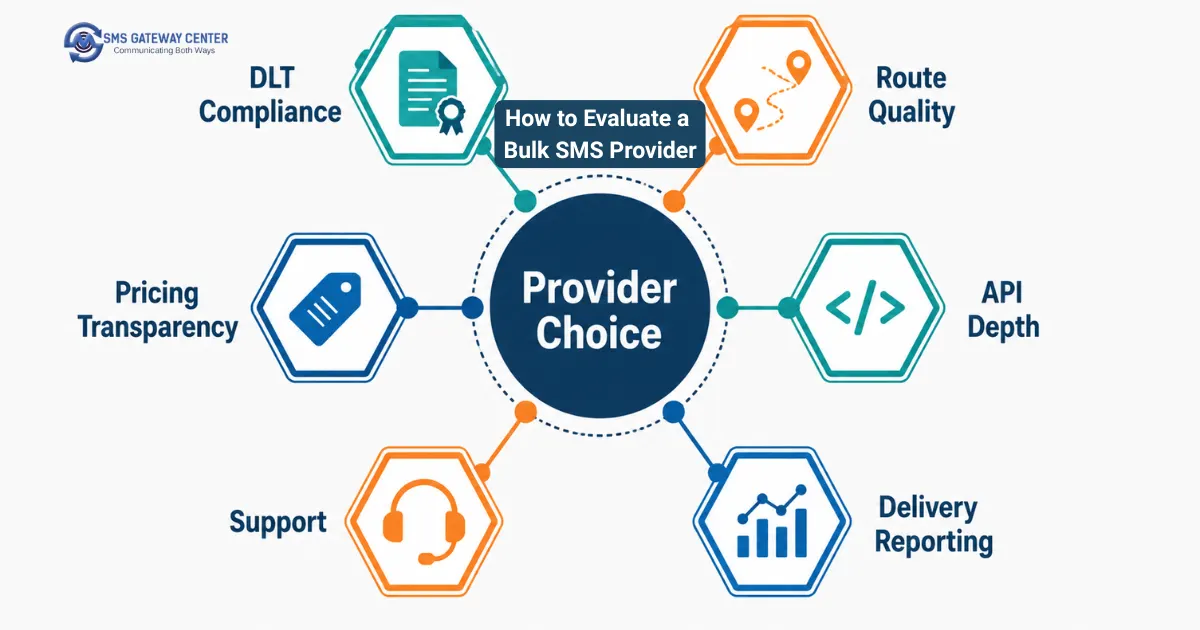
How to Evaluate a Bulk SMS Provider: Six Criteria
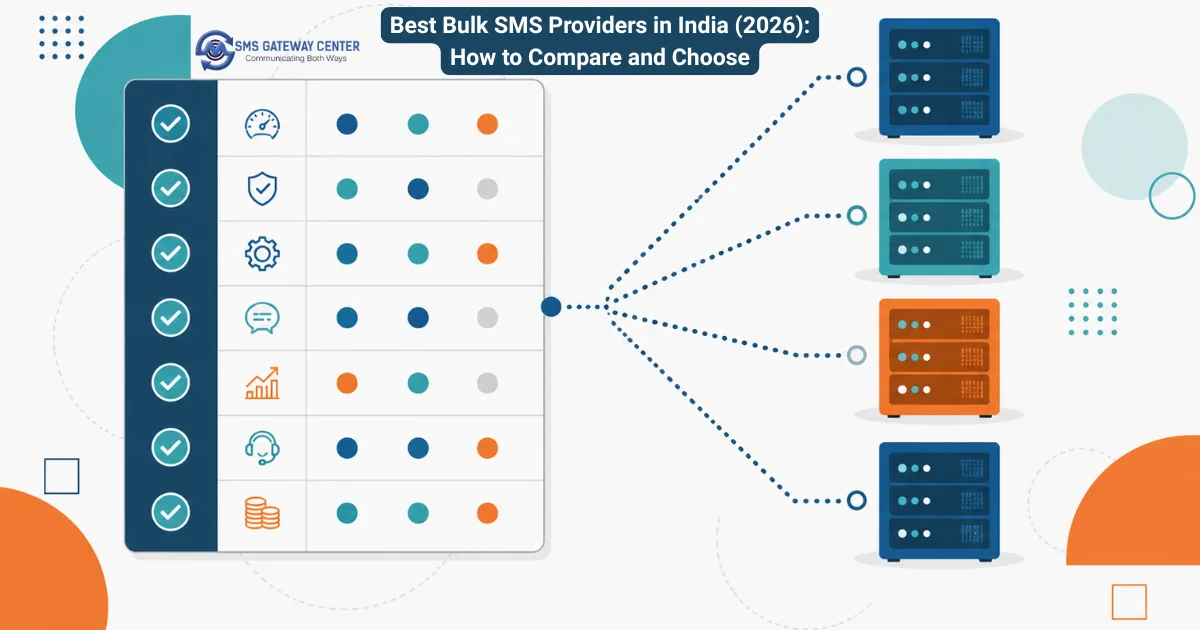
Use the same six criteria for every provider you shortlist. Scoring each one consistently is more useful than any published ranking.
- DLT compliance support: Does the provider guide registration, validate templates, and clearly report DLT rejections?
- Route quality: Are messages sent over direct operator connections, and is the transactional route separated from the promotional route? Route quality affects delivery speed and reliability more than price does.
- API depth: Beyond a basic send call, does the API expose delivery reports, OTP generation and verification, scheduling, sender ID and template management, and webhooks? A deeper API means less glue code on your side.
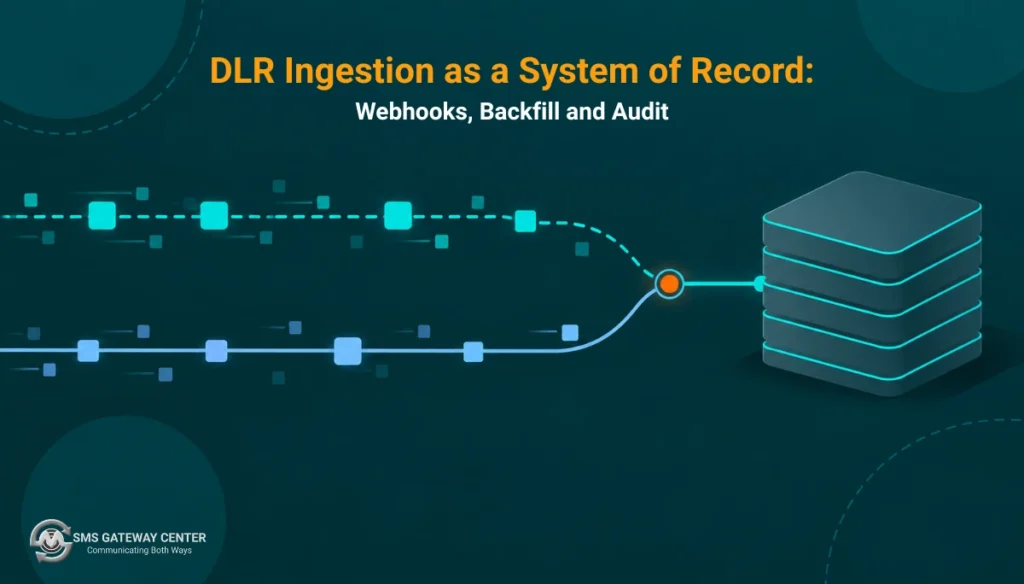
- Delivery reporting honesty: Can you see real delivery receipts (DLRs), not just “submitted” status? Accurate reporting is what lets you trust the numbers.
- Support responsiveness: When a route breaks or a template is rejected at 2 AM during a campaign, how fast can you reach a human?
- Pricing transparency: Is pricing clear by route and message type, or hidden behind “contact sales” with per-message rates that shift?
Bulk SMS Providers in India: Overview
The Indian market has a mix of large multi-channel platforms, India-focused SMS specialists, and low-cost entry-level tools. Well-known names that appear across independent comparison lists include Gupshup, MSG91, Kaleyra (Tata), Route Mobile, ValueFirst, Textlocal, SMSCountry, and SMSGatewayCenter, among others. Each occupies a different position: some emphasize global multi-channel reach and enterprise contracts, others focus on developer-friendly APIs, and others compete mainly on low promotional pricing.
Rather than repeat feature claims we cannot independently verify for each competitor, the honest approach is this: take the six criteria above, request a trial from any two or three that look relevant to your use case, and score them yourself. Independent roundups such as those from SMSCountry and other industry blogs can help you build a shortlist, but treat every vendor-published ranking, including this one, as a starting point rather than a verdict.
Where SMSGatewayCenter Fits
SMSGatewayCenter is an India-based messaging provider operating since 2010, run by Popular SoftTech and Marketing Pvt Ltd out of Mumbai. It is built around India-first DLT workflows and provides SMS, WhatsApp Business API, Voice (OBD) calls, RCS, and Telegram messaging on a single platform, with connectivity described across its network of over 1,000 mobile operators. On the technical side, it exposes a documented developer API covering send, OTP generate and verify, delivery reports, sender ID and DLT template management, webhooks, and both HTTP and SMPP connectivity for higher-volume senders.
Where it fits best: teams that want India-focused DLT support and a single platform spanning SMS plus WhatsApp and RCS, rather than stitching together separate vendors per channel. Where it may not be the obvious pick: organizations whose priority is a specific global enterprise contract structure or a channel SMSGatewayCenter does not focus on. As with any provider on your shortlist, the right move is to run a test campaign and compare the delivery report against the alternatives.
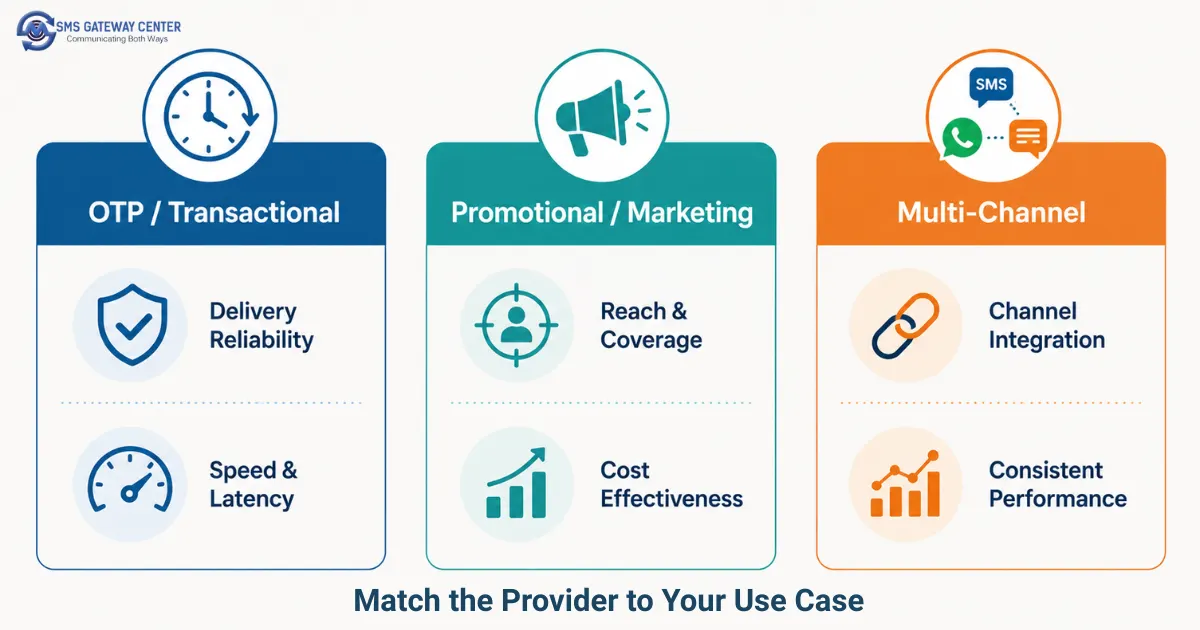
Match the Provider to Your Use Case
| Use case | What matters most | What to test |
|---|---|---|
| OTP / 2FA | Delivery speed, transactional route quality, uptime | Time from API call to handset, failure rate on a live route |
| Transactional alerts | Reliable DLRs, template management, throughput | Whether “delivered” in the report matches the handset |
| Promotional campaigns | Pricing transparency, DLT template workflow, DND handling | Cost per delivered message, not cost per submitted message |
| Multi-channel (SMS + WhatsApp + RCS) | Single platform, fallback logic, unified reporting | Whether channels share one API and one report |
| High-volume / telecom-grade | SMPP support, TPS headroom, route separation | Sustained throughput without throttling errors |
For high-volume senders specifically, the difference between HTTP and SMPP matters, and the errors you will hit at scale are covered in our SMPP error codes reference.
Pricing: What Actually Drives Cost
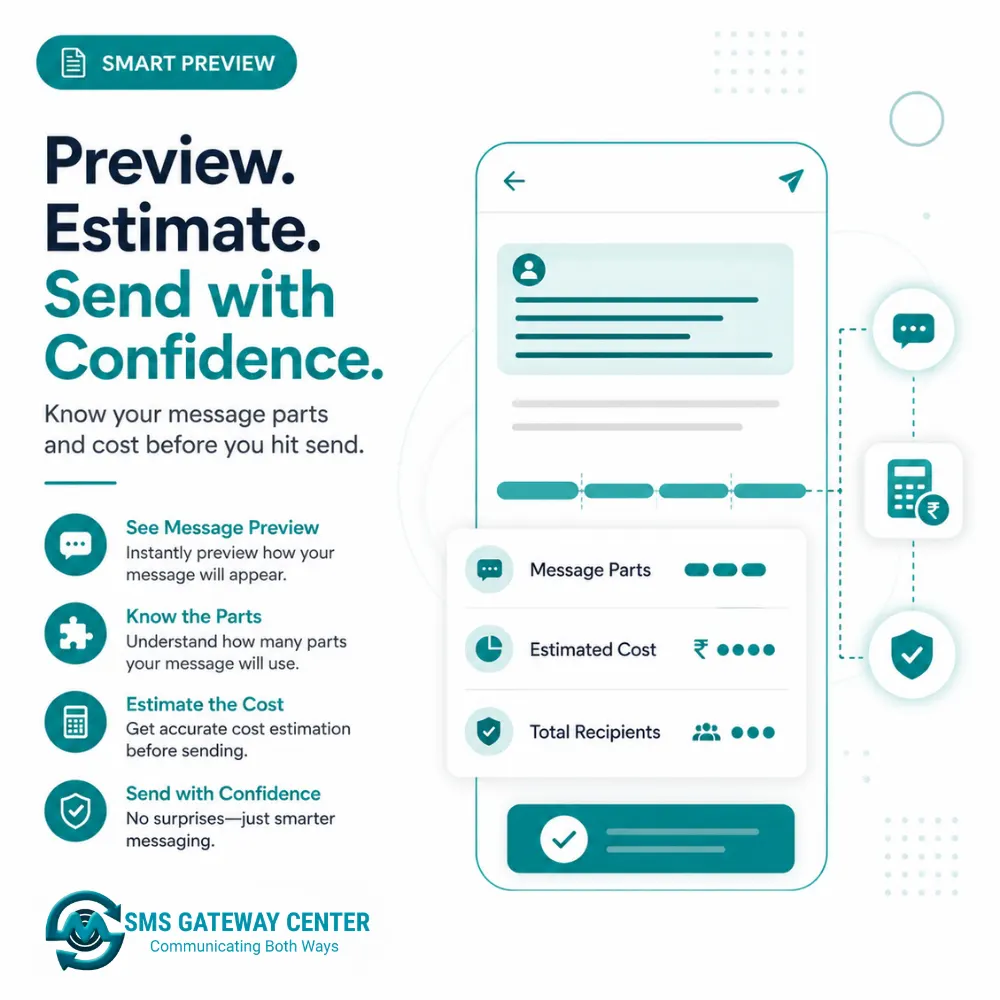
Per-SMS pricing in India is driven less by the provider’s brand and more by route type (transactional, promotional, OTP, international), message length and encoding (GSM 7-bit versus Unicode), and volume commitment. Published market ranges commonly cited in independent comparisons fall roughly between ₹0.10 and ₹0.30 per SMS depending on these factors, but treat any single quoted number cautiously, because the real cost is per delivered message, not per submitted message. A cheaper rate on a low-quality route that fails to deliver is more expensive in practice than a slightly higher rate that lands. For SMSGatewayCenter’s own published rates, see the pricing page rather than relying on a number quoted second-hand.
Red Flags When Choosing a Provider
Watch for providers that report only “submitted” status and cannot show real delivery receipts, that are vague about whether transactional and promotional traffic run on separate routes, that cannot explain their DLT registration support, or that quote a headline price without clarifying route and message type. A provider that publishes star ratings of itself against competitors is also a signal to be skeptical, which is exactly why this guide uses a self-scoring framework instead of assigning ratings we cannot substantiate.
How to Run a Fair Trial Before You Commit
- Pick one real use case (for example, OTP delivery to your own team’s numbers across different operators).
- Register the same sender ID and template through each shortlisted provider so DLT variables are controlled.
- Send the identical message volume through each, at the same time of day.
- Compare actual delivery receipts, not submission confirmations.
- Note time-to-delivery, failure causes, and how quickly support responds to any issue.
- Only then compare price, on a cost-per-delivered-message basis.
FAQs
Who is the best bulk SMS provider in India? There is no single best provider for everyone. The best choice depends on your use case: route quality and speed matter most for OTP, while pricing transparency and template workflow matter most for promotional campaigns. Shortlist two or three and compare real delivery reports.
Is DLT registration mandatory for bulk SMS in India? Yes. Under TRAI rules, commercial SMS to Indian numbers requires a registered entity, approved header, and approved content template. Any provider that suggests you can skip this is a red flag.
How much does bulk SMS cost in India? Independent comparisons commonly cite a range of roughly ₹0.10 to ₹0.30 per SMS, driven by route type, message encoding, and volume. Compare on cost per delivered message rather than the headline rate.
Can one provider handle SMS, WhatsApp, and RCS together? Some can. Multi-channel platforms, including SMSGatewayCenter, offer SMS alongside WhatsApp Business API and RCS on one platform, which simplifies reporting and fallback compared with using separate vendors per channel.
How do I verify a provider’s delivery claims? Run a controlled trial and inspect actual delivery receipts (DLRs). “Submitted” status is not the same as “delivered,” and only real DLRs let you verify a provider’s reliability.
Experience SMSGatewayCenter Firsthand
Before you commit to any provider, run the same test campaign through your shortlist and compare delivery reports. If you want SMSGatewayCenter in that comparison, start a free trial and send a test batch to your own numbers.