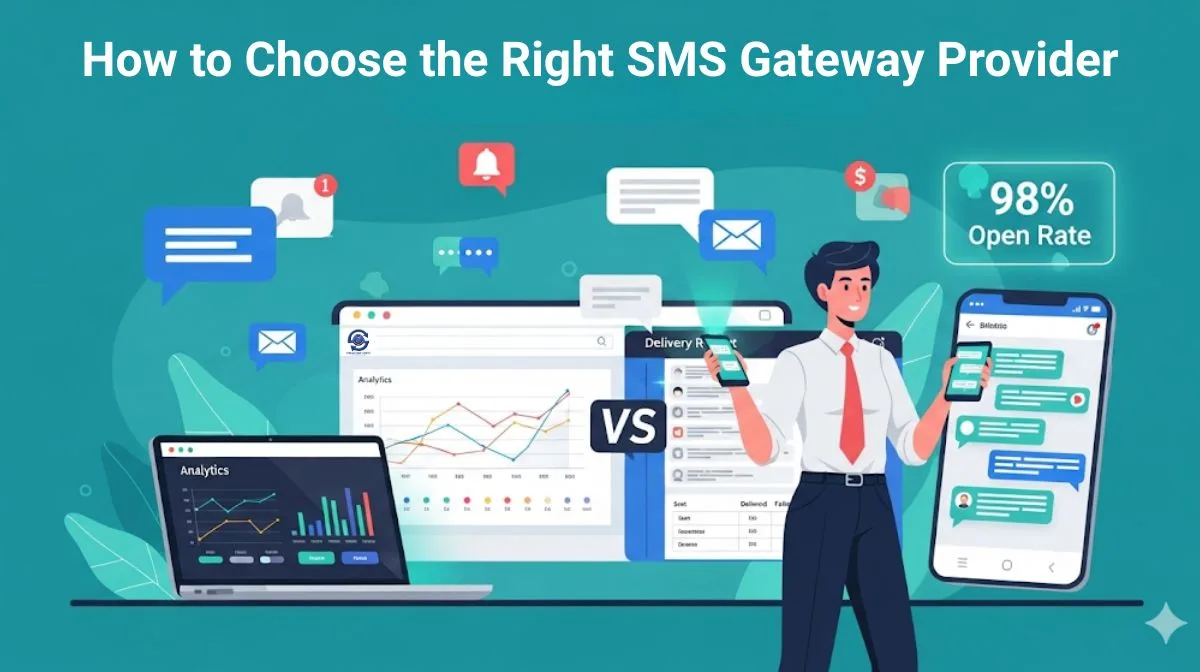
But with hundreds of SMS gateway providers in the market, how do you choose the one that’s perfect for your business needs? This comprehensive guide will walk you through everything you need to know to make an informed decision.
Why SMS Gateway Selection Matters More Than Ever
Before diving into the selection criteria, it’s crucial to understand why your choice of SMS gateway provider is so critical. A poor choice can result in:
- Delayed or failed message delivery affecting customer experience
- Compliance violations leading to hefty fines and legal issues
- Hidden costs that can quickly spiral out of control
- Poor customer support when you need help the most
- Limited scalability as your business grows
On the other hand, the right provider can help you:
- Build stronger customer relationships through reliable communication
- Ensure regulatory compliance across different regions
- Scale your messaging needs cost-effectively
- Integrate seamlessly with your existing systems
- Access advanced features like delivery reports and analytics
Key Evaluation Criteria for SMS Gateway Providers
1. Reliability and Uptime
Your SMS gateway is only as good as its reliability. Look for providers that offer:
- 99.9% or higher uptime guarantee with service level agreements (SLAs)
- Redundant infrastructure with multiple data centers
- Real-time monitoring and alerting systems
- Historical uptime data you can verify independently
Pro Tip: Check third-party monitoring services like Pingdom or UptimeRobot to verify claimed uptime statistics. Many providers publish their status pages publicly.
2. Global Reach and Coverage
If your business operates internationally or plans to expand globally, coverage becomes crucial:
- Country-specific routing for optimal delivery rates
- Local number support in target markets
- International compliance with regional regulations
- Multi-carrier partnerships to ensure maximum coverage
For businesses in India, ensure your provider supports TRAI DLT compliance and has strong relationships with major Indian telecom operators.
3. Compliance and Security
SMS regulations vary by country and are constantly evolving. Your provider must ensure:
- GDPR compliance for European operations
- TCPA compliance for US-based messaging
- TRAI DLT registration for Indian SMS campaigns
- SOC 2 Type II certification for security standards
- End-to-end encryption for sensitive data
Critical Point: Non-compliance can result in fines of up to $1,500 per message in the US and similar penalties in other jurisdictions. Always verify your provider’s compliance certifications.
4. API Quality and Documentation
A robust API is essential for seamless integration:
- RESTful API design with clear, consistent endpoints
- Comprehensive documentation with code examples
- SDKs and libraries for popular programming languages
- Webhook support for real-time delivery notifications
- Rate limiting and error handling mechanisms
Look for providers that offer developer-friendly APIs with extensive documentation and active developer communities.
5. Pricing Transparency and Value
SMS pricing can be complex, with hidden fees that quickly add up:
- Transparent pricing structure with no hidden charges
- Volume discounts that scale with your usage
- Pay-per-use vs. monthly plans based on your needs
- International vs. domestic pricing clearly separated
- Failed message policies (do you pay for undelivered messages?)
Cost Analysis Example:
- Provider A: $0.05 per SMS + $50/month platform fee
- Provider B: $0.06 per SMS, no monthly fee
- At 10,000 messages/month: Provider A = $550, Provider B = $600
- At 50,000 messages/month: Provider A = $2,550, Provider B = $3,000
Technical Requirements to Consider
1. Integration Capabilities
Your SMS gateway should integrate seamlessly with your existing tech stack:
- CRM integration (Salesforce, HubSpot, Pipedrive)
- E-commerce platforms (Shopify, WooCommerce, Magento)
- Marketing automation tools (Mailchimp, ActiveCampaign)
- Custom applications via REST APIs
- Webhook support for real-time updates
2. Message Types and Features
Different business needs require different message types:
- Transactional SMS for OTPs, alerts, and confirmations
- Promotional SMS for marketing campaigns
- Two-way messaging for customer support
- Scheduled messaging for automated campaigns
- Template management for DLT-compliant messaging
3. Analytics and Reporting
Comprehensive analytics help optimize your SMS strategy:
- Delivery reports with detailed status codes
- Open and click tracking (for rich SMS)
- Cost analysis and usage reports
- A/B testing capabilities for message optimization
- Real-time dashboards for campaign monitoring
4. Scalability and Performance
Your provider should grow with your business:
- High throughput (messages per second)
- Queue management during peak times
- Load balancing across multiple servers
- Auto-scaling based on demand
- Peak hour handling without message loss
Cost Considerations: Beyond the Price Tag
1. Total Cost of Ownership (TCO)
Look beyond per-message pricing to understand true costs:
- Setup and integration fees
- Monthly platform charges
- Support and maintenance costs
- Compliance and certification fees
- Training and onboarding expenses
2. Volume-Based Pricing Models
Most providers offer tiered pricing:
- Pay-as-you-go: Best for low-volume users
- Monthly packages: Good for consistent usage
- Annual contracts: Best value for high-volume users
- Enterprise plans: Custom pricing for large organizations
3. Hidden Costs to Watch Out For
- Failed message charges (some providers charge for undelivered messages)
- International surcharges for global messaging
- Premium features that require additional fees
- Support tier upgrades for priority assistance
- Data retention fees for long-term message storage
Industry-Specific Considerations
For E-commerce Businesses
- Order confirmation SMS with tracking links
- Abandoned cart recovery via SMS
- Delivery notifications and updates
- Customer service integration
- Multi-language support for global customers
For Financial Services
- OTP and authentication messages
- Fraud alerts and security notifications
- Transaction confirmations and receipts
- Regulatory compliance (PCI DSS, etc.)
- High-security standards and encryption
For Healthcare
- Appointment reminders and confirmations
- Prescription notifications and refills
- HIPAA compliance for patient data
- Emergency alerts and critical communications
- Integration with EHR systems
For Recruitment Agencies
- Job alert notifications to candidates
- Interview scheduling and reminders
- Application status updates and confirmations
- Client communication and progress reports
- Bulk messaging for candidate outreach
Red Flags to Avoid
1. Poor Customer Support
- Slow response times (more than 24 hours)
- Limited support channels (only email)
- No dedicated account managers
- Unhelpful or unknowledgeable staff
- No 24/7 support for critical issues
2. Lack of Transparency
- Unclear pricing structures
- Hidden fees and charges
- No public uptime statistics
- Vague compliance claims
- Limited documentation
3. Technical Limitations
- Outdated API designs
- Limited integration options
- Poor error handling
- No webhook support
- Inadequate security measures
4. Compliance Issues
- No DLT registration for Indian SMS
- Missing GDPR compliance documentation
- No SOC 2 certification
- Outdated security protocols
- No data retention policies
Making Your Final Decision
1. Create a Scoring Matrix
Rate each provider on key criteria (1-10 scale):
| Criteria | Weight | Provider A | Provider B | Provider C |
|---|---|---|---|---|
| Reliability | 25% | 9 | 8 | 7 |
| Pricing | 20% | 8 | 9 | 6 |
| Features | 20% | 7 | 8 | 9 |
| Support | 15% | 8 | 7 | 8 |
| Compliance | 10% | 9 | 8 | 7 |
| Integration | 10% | 8 | 7 | 9 |
2. Request Demos and Trials
- Free trial periods (at least 30 days)
- Live demonstrations of key features
- Sandbox environments for testing
- Pilot programs with real data
- Reference customer conversations
3. Evaluate Long-term Partnership
- Company stability and financial health
- Product roadmap and innovation
- Customer success stories and case studies
- Industry recognition and awards
- Partnership ecosystem and integrations
Implementation Best Practices
1. Start with a Pilot Program
- Choose a small, representative sample
- Test all critical message types
- Monitor delivery rates and performance
- Gather user feedback and metrics
- Iterate and optimize before full rollout
2. Plan for Compliance
- Register all message templates with DLT
- Implement proper opt-in/opt-out mechanisms
- Set up data retention and privacy policies
- Train your team on compliance requirements
- Regular audits and compliance checks
3. Monitor and Optimize
- Track key performance indicators (KPIs)
- A/B test different message formats
- Optimize send times and frequencies
- Monitor delivery rates and costs
- Regular provider performance reviews
The Future of SMS Gateways
As technology evolves, SMS gateway providers are incorporating:
- AI-powered message optimization for better engagement
- Rich messaging with images and interactive elements
- Chatbot integration for automated conversations
- Advanced analytics with machine learning insights
- Omnichannel messaging across SMS, email, and push notifications
Conclusion: Your Path to SMS Success
Choosing the right SMS gateway provider is a critical decision that can significantly impact your business communication strategy. By carefully evaluating providers based on reliability, compliance, features, and cost, you can find a partner that will support your growth and help you deliver exceptional customer experiences.
Remember, the cheapest option isn’t always the best, and the most expensive doesn’t guarantee quality. Focus on finding a provider that offers the right balance of features, reliability, and support for your specific needs.
Key Takeaways:
- Prioritize reliability and compliance over cost
- Test thoroughly before committing
- Plan for long-term scalability
- Stay updated on regulatory changes
- Monitor performance continuously
Ready to get started? Consider providers like SMS Gateway Center that offer comprehensive solutions with DLT compliance, developer-friendly APIs, and industry-specific templates to help you succeed.
The right SMS gateway provider isn’t just a vendor-they’re a strategic partner in your business growth. Choose wisely, and your customers will thank you for it.