Understanding how NCPR scrubbing and spam filtering work, and implementing best practices for credit management, is essential for any business that relies on bulk SMS services in India. This comprehensive guide will help you navigate these requirements and ensure your SMS campaigns remain compliant, cost-effective, and successful.
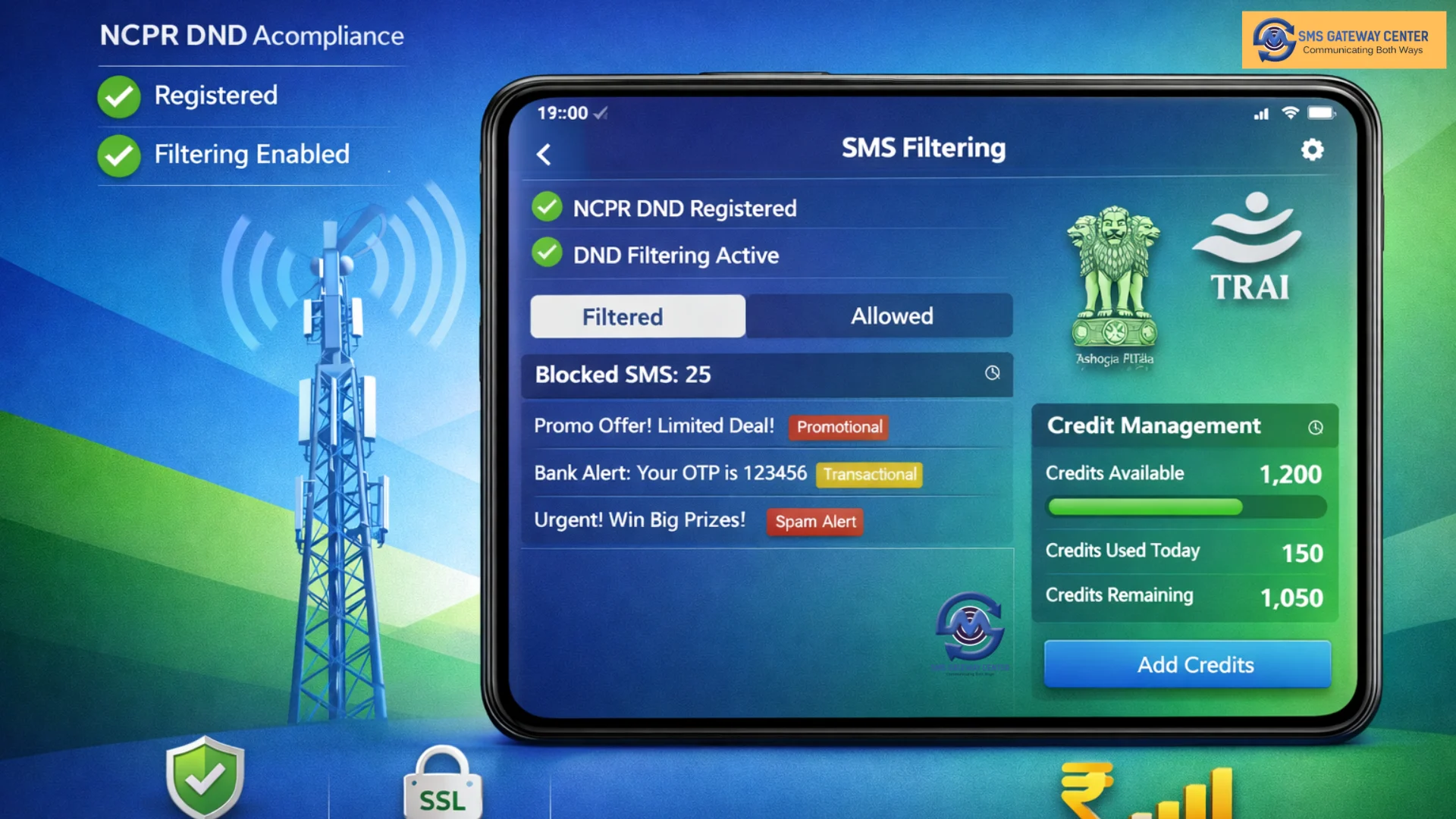
Understanding NCPR Regulations: The Foundation of SMS Compliance
The National Customer Preference Register (NCPR) is a centralized database maintained by TRAI that empowers consumers to control the commercial communications they receive. This system allows mobile users to register their preferences regarding promotional SMS and calls, creating a framework that businesses must respect when sending marketing messages.
What is NCPR and How Does It Work?
NCPR, also known as the DND Registry, enables consumers to opt out of receiving unsolicited commercial communications (UCC) in two ways:
Full Blocking: Consumers can register to completely block all promotional SMS and calls. Once a number is registered as fully blocked in the NCPR, businesses are legally prohibited from sending any promotional messages to that number.
Selective Blocking: Consumers can choose to block messages from specific categories while allowing others. The NCPR recognizes seven predefined categories:
- Banking/Insurance/Financial Products/Credit Cards
- Real Estate
- Education
- Health
- Consumer Goods and Automobiles
- Communication/Broadcasting/Entertainment/IT
- Tourism and Leisure
The Legal Framework
TRAI’s regulations make it mandatory for all businesses sending promotional SMS to scrub their contact lists against the NCPR database before sending messages. This process, known as NCPR scrubbing, ensures that messages are not sent to numbers that have opted out of receiving promotional communications.
The regulations distinguish between two types of SMS:
Transactional SMS: These include essential information such as OTPs, account balance notifications, delivery alerts, and payment confirmations. Transactional messages can be delivered to both DND and non-DND numbers, provided they comply with DLT registration requirements.
Promotional SMS: These are marketing messages that require explicit consent and must not be sent to DND-registered numbers. Promotional messages are subject to stricter regulations, including time restrictions (only between 9:00 AM and 9:00 PM) and mandatory DLT template registration.
Why NCPR Compliance Matters
Non-compliance with NCPR regulations can result in severe consequences for businesses:
- Financial Penalties: TRAI can impose significant fines on businesses that violate DND regulations
- Delivery Failures: Messages sent to DND numbers will be blocked by telecom operators
- Reputation Damage: Repeated violations can lead to blacklisting and loss of sender credibility
- Legal Action: Consumers can file complaints against businesses that send unsolicited messages
For businesses using SMS Gateway Center’s bulk SMS services, understanding and implementing NCPR compliance is essential for maintaining successful campaigns and avoiding these pitfalls.
Spam Filtering Best Practices: Protecting Your Campaigns
Spam filtering goes beyond NCPR compliance. It involves implementing comprehensive strategies to ensure your messages are delivered successfully, maintain high engagement rates, and protect your sender reputation. Here are the best practices that every business should follow:
1. Implement Automated NCPR Scrubbing
The most critical practice is to ensure that your SMS service provider automatically scrubs all contact lists against the NCPR database before sending promotional messages. This automated process should:
- Check each number against the DND registry in real-time
- Filter out fully blocked numbers
- Respect selective blocking preferences based on message category
- Provide detailed reports on filtered numbers
At SMS Gateway Center, our platform automatically performs NCPR scrubbing for all promotional campaigns, ensuring compliance without requiring manual intervention from users.
2. Maintain Clean Contact Lists
Regular list hygiene is essential for effective spam filtering and campaign success:
Remove Invalid Numbers: Regularly clean your contact database to remove invalid, disconnected, or inactive numbers. Sending messages to invalid numbers wastes credits and can negatively impact your sender reputation.
Verify Consent: Ensure that all numbers in your promotional SMS lists have provided explicit consent to receive marketing messages. Maintain records of when and how consent was obtained.
Segment Your Lists: Organize contacts based on their preferences, engagement history, and message category. This allows you to send more targeted messages and respect selective DND preferences.
Update Regularly: Keep your contact lists updated with the latest NCPR data. Consumer preferences can change, and numbers can be added to or removed from the DND registry at any time.
3. Optimize Message Content
The content of your messages plays a crucial role in spam filtering and delivery success:
Use Registered DLT Templates: For messages sent in India, always use DLT-registered templates. Unregistered templates or messages that don’t match registered templates will be blocked.
Avoid Spam Triggers: Certain words and phrases can trigger spam filters. Avoid excessive use of:
- ALL CAPS text
- Multiple exclamation marks or special characters
- Words like “free,” “urgent,” “limited time,” when used excessively
- Suspicious links or shortened URLs without proper context
Personalize Messages: Personalized messages with relevant content are less likely to be flagged as spam and have higher engagement rates.
Include Opt-Out Instructions: Always provide clear instructions for recipients who wish to opt out of future messages. This demonstrates compliance and builds trust.
4. Respect Timing Restrictions
TRAI regulations specify that promotional SMS can only be sent between 9:00 AM and 9:00 PM in the recipient’s time zone. Sending messages outside these hours can result in:
- Automatic blocking by telecom operators
- Wasted credits for undelivered messages
- Potential regulatory violations
- Negative impact on sender reputation
Implement scheduling features that automatically respect these time restrictions, ensuring your messages are sent only during permitted hours.
5. Monitor Delivery Reports
Regular monitoring of delivery reports helps identify potential issues before they become major problems:
Track Delivery Rates: Monitor the percentage of messages successfully delivered. A sudden drop in delivery rates may indicate spam filtering issues.
Analyze Failure Reasons: Review reasons for failed deliveries. Common reasons include:
- DND-registered numbers
- Invalid numbers
- Network issues
- Content filtering
Monitor Sender Reputation: Track metrics that indicate your sender reputation, such as complaint rates and engagement levels. A declining reputation can lead to increased spam filtering.
6. Implement Double Opt-In
For promotional campaigns, consider implementing a double opt-in process:
- Initial consent is obtained (first opt-in)
- A confirmation message is sent asking recipients to confirm their subscription
- Only confirmed subscribers receive promotional messages
This practice ensures higher quality contact lists and reduces the likelihood of complaints or spam reports.
7. Use Transactional SMS for Critical Communications
For time-sensitive or critical information, use transactional SMS instead of promotional SMS. Transactional messages:
- Can be delivered to DND-registered numbers
- Are not subject to time restrictions
- Have higher priority in delivery queues
- Are less likely to be filtered as spam
Examples of appropriate transactional messages include OTPs, order confirmations, delivery updates, and account alerts.
Credit Management for Filtered Numbers: Maximizing Your Investment
One of the most important aspects of NCPR scrubbing and spam filtering is understanding how credits are managed when numbers are filtered out. This knowledge helps businesses optimize their SMS spending and make informed decisions about campaign strategies.
Understanding Credit Deduction Policies
Different SMS service providers have different policies regarding credit deduction for filtered numbers. It’s essential to understand your provider’s policy:
Pre-Filtering Deduction: Some providers deduct credits before filtering, meaning you pay for all numbers in your list, including those that are filtered out.
Post-Filtering Deduction: Other providers only deduct credits for numbers that pass filtering and are actually sent. This approach is more cost-effective for businesses.
Hybrid Approach: Some providers offer a combination, with different policies for different types of filtering (NCPR vs. invalid numbers).
At SMS Gateway Center, we provide transparent credit management that helps you understand exactly what you’re paying for. Our system clearly shows:
- Total numbers in your list
- Numbers filtered by NCPR
- Numbers filtered for other reasons (invalid, duplicate, etc.)
- Numbers actually sent
- Credits deducted for each category
Best Practices for Credit Management
1. Pre-Campaign Scrubbing
Before launching a large campaign, consider pre-scrubbing your contact list:
- Upload your list to the platform
- Run a scrubbing process to identify DND numbers
- Review the filtered numbers and their reasons
- Clean your list before sending
This approach helps you:
- Understand the potential reach of your campaign
- Budget more accurately
- Identify data quality issues early
- Make informed decisions about list segmentation
2. Regular List Maintenance
Implement regular maintenance schedules for your contact lists:
- Weekly or monthly scrubbing of active lists
- Removal of consistently filtered numbers
- Updating of consent records
- Segmentation based on engagement and filtering history
Regular maintenance reduces wasted credits and improves campaign effectiveness over time.
3. Optimize List Quality
Focus on building high-quality contact lists:
- Collect numbers through legitimate opt-in processes
- Verify numbers at the point of collection
- Regularly update and clean your database
- Remove inactive or unengaged contacts
High-quality lists have lower filtering rates, resulting in better credit utilization and higher ROI.
4. Use Segmentation Strategically
Segment your lists based on filtering history and engagement:
- High-Value Segments: Numbers that consistently pass filtering and show high engagement
- Medium-Value Segments: Numbers with occasional filtering but good engagement when messages are delivered
- Low-Value Segments: Numbers with frequent filtering or low engagement
Allocate your SMS budget strategically, focusing more credits on high-value segments while maintaining engagement with other segments.
5. Monitor Credit Efficiency Metrics
Track key metrics to understand your credit efficiency:
- Filtering Rate: Percentage of numbers filtered before sending
- Delivery Rate: Percentage of sent messages successfully delivered
- Engagement Rate: Percentage of delivered messages that generate responses or actions
- Cost Per Delivery: Average credit cost per successfully delivered message
- Cost Per Engagement: Average credit cost per engaged recipient
These metrics help you identify areas for improvement and optimize your SMS spending.
6. Leverage Transactional SMS for DND Numbers
For important communications to DND-registered customers, use transactional SMS instead of promotional SMS:
- Transactional messages can reach DND numbers
- They don’t require NCPR scrubbing
- They have higher delivery rates
- They’re more likely to be read and acted upon
This approach ensures critical information reaches all customers while respecting their promotional message preferences.
7. Implement Smart Retry Logic
For messages that fail due to temporary issues (not DND-related), implement smart retry logic:
- Automatic retry for network-related failures
- Exponential backoff to avoid overwhelming networks
- Maximum retry limits to prevent credit waste
- Different strategies for different failure types
Smart retry logic improves delivery rates without wasting credits on permanently blocked numbers.
The Technical Side: How NCPR Scrubbing Works
Understanding the technical process of NCPR scrubbing helps businesses appreciate the complexity and importance of this compliance requirement.
The Scrubbing Process
When you submit a promotional SMS campaign, the following process typically occurs:
- List Upload: Your contact list is uploaded to the SMS platform
- Format Validation: Numbers are validated for correct format and structure
- NCPR Database Query: Each number is checked against the NCPR database
- Filtering Decision: Numbers are categorized as:
- Allowed: Number is not in DND registry or matches selective preferences
- Fully Blocked: Number is registered for full DND
- Category Blocked: Number has blocked the specific message category
- Additional Filtering: Other filters may be applied (invalid numbers, duplicates, etc.)
- Campaign Execution: Only allowed numbers receive messages
- Reporting: Detailed reports show filtering results and credit usage
Real-Time vs. Batch Scrubbing
Different approaches to NCPR scrubbing offer different benefits:
Real-Time Scrubbing: Numbers are checked against NCPR database at the time of sending. This ensures the most up-to-date compliance but may add slight latency to the sending process.
Batch Scrubbing: Lists are pre-scrubbed before sending. This allows for better planning and reporting but requires keeping scrubbed data current.
Modern SMS platforms typically use a combination of both approaches, with batch scrubbing for large campaigns and real-time scrubbing for smaller, immediate sends.
Common Challenges and Solutions
Businesses often face several challenges when implementing NCPR scrubbing and spam filtering. Here are common issues and their solutions:
Challenge 1: High Filtering Rates
Problem: A significant percentage of your contact list is being filtered, reducing campaign reach.
Solutions:
- Review your list acquisition methods and ensure proper consent
- Implement double opt-in to improve list quality
- Regularly clean and update your contact database
- Focus on building engaged, opted-in subscriber lists
Challenge 2: Unexpected Credit Deductions
Problem: Credits are being deducted for filtered numbers, leading to budget overruns.
Solutions:
- Understand your provider’s credit deduction policy
- Use pre-campaign scrubbing to estimate costs
- Consider providers with post-filtering credit deduction
- Monitor credit usage reports regularly
Challenge 3: Delivery Rate Fluctuations
Problem: Delivery rates vary significantly between campaigns.
Solutions:
- Monitor delivery reports for patterns
- Investigate failure reasons systematically
- Maintain consistent message quality and compliance
- Work with your provider to identify and resolve issues
Challenge 4: Managing Multiple Campaign Categories
Problem: Difficulty managing campaigns across different message categories with selective DND preferences.
Solutions:
- Segment lists based on message categories
- Use appropriate DLT templates for each category
- Implement category-specific scrubbing rules
- Maintain separate lists for different campaign types
The Future of SMS Compliance in India
The SMS ecosystem in India continues to evolve, with TRAI regularly updating regulations to better protect consumers while enabling legitimate business communications. Businesses that stay informed and adapt to these changes will maintain successful SMS campaigns.
Key trends to watch:
- Enhanced DLT Requirements: Continued strengthening of DLT registration and template requirements
- Advanced Filtering Technologies: Improved spam detection and filtering capabilities
- Consumer Empowerment: More tools and options for consumers to control their communications
- Industry Self-Regulation: Industry initiatives to improve compliance and reduce spam
Conclusion: Building Compliant and Successful SMS Campaigns
NCPR scrubbing and spam filtering are not just regulatory requirements but essential practices for building successful SMS campaigns in India. By understanding NCPR regulations, implementing spam filtering best practices, and managing credits effectively, businesses can:
- Maintain compliance with TRAI regulations
- Protect their sender reputation
- Optimize their SMS spending
- Achieve better campaign results
- Build stronger customer relationships
At SMS Gateway Center, we provide comprehensive tools and support to help businesses navigate these requirements. Our platform includes automated NCPR scrubbing, advanced spam filtering, transparent credit management, and detailed reporting that helps you understand and optimize your SMS campaigns.
Whether you’re sending transactional SMS, promotional campaigns, or OTP messages, compliance with NCPR regulations and effective spam filtering are fundamental to your success.
Remember, compliance is not a one-time activity but an ongoing process. Regular monitoring, list maintenance, and staying informed about regulatory changes will help you build and maintain successful SMS campaigns that respect consumer preferences while achieving your business objectives.
For more information about SMS compliance, DLT registration, or bulk SMS services, contact our support team or visit our contact page. We’re here to help you navigate the complexities of India’s SMS ecosystem and build compliant, successful messaging campaigns.
Recent Articles:
Take Control of Your Account Security: Manage All Your Connected Devices
Master Your SMS Campaigns: A Guide to the A/B Test Comparator Report
Unlock the Power of Location: How AI-Powered Link Tracking Transforms Your SMS Campaigns