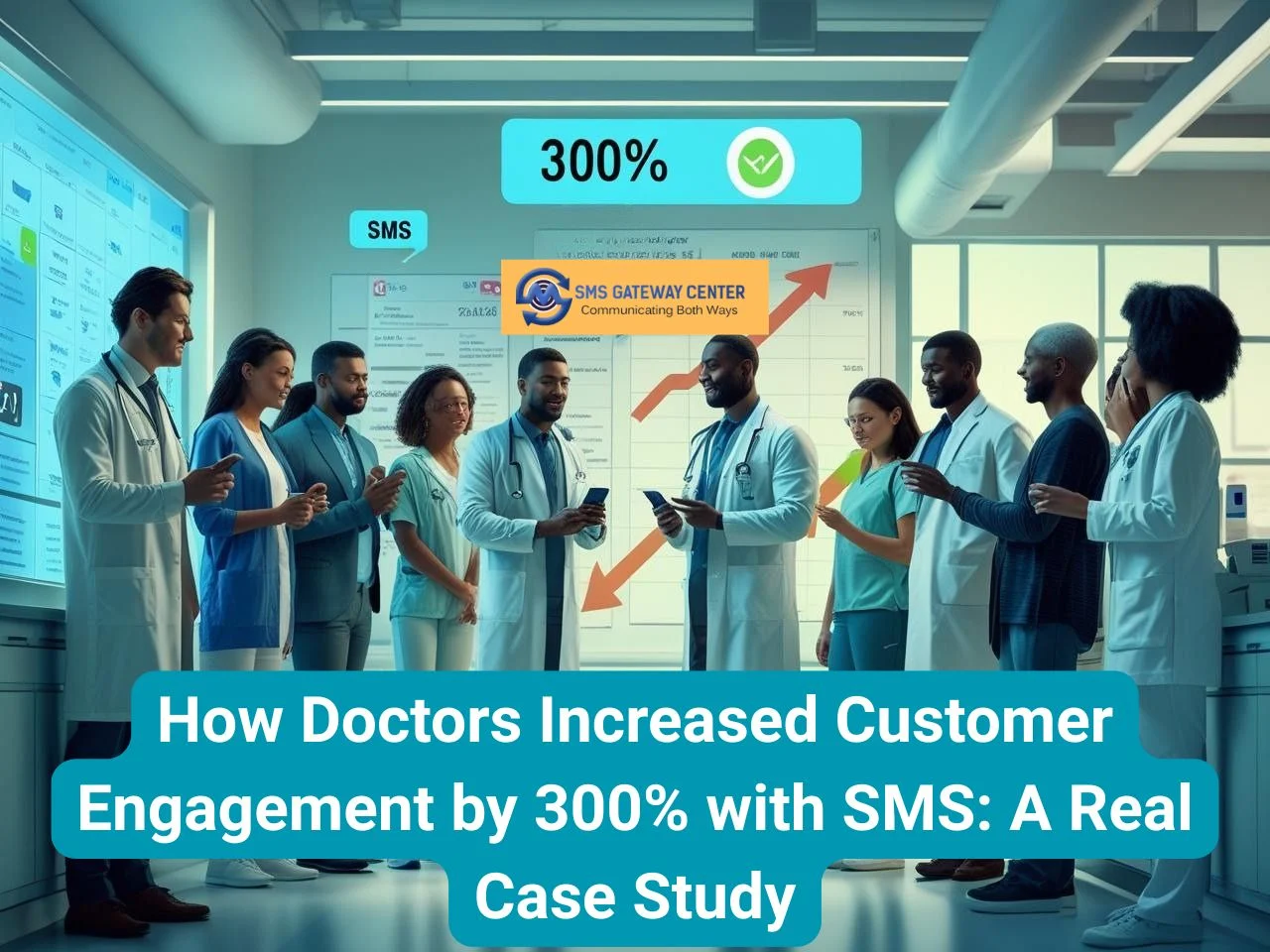
This real case study reveals how a mid-sized medical practice increased their customer engagement by an astounding 300% using strategic bulk SMS implementation. We’ll dive deep into their implementation strategy, the metrics that matter, and the impressive ROI they achieved.
The Challenge: Declining Patient Engagement
The Practice Profile
- Type: Multi-specialty medical practice
- Size: 15 doctors, 3 locations
- Patient Base: 8,000+ active patients
- Previous Communication: Email newsletters, phone calls, paper reminders
The Problem
Dr. Sarah Patel, the practice manager, was facing a critical challenge: patient engagement was declining rapidly. Their traditional communication methods were failing:
- Email open rates: 12% (industry average: 15-20%)
- Appointment no-shows: 28% (costing $45,000 annually)
- Patient satisfaction scores: 6.2/10
- Follow-up appointment booking: 35% within 30 days
“The reality was stark,” recalls Dr. Patel. “We were losing patients to competitors who were more tech-savvy, and our staff was overwhelmed with manual follow-up calls. We needed a solution that was both effective and scalable.”
The Solution: Strategic SMS Implementation
Phase 1: Research and Planning (Month 1)
The practice team researched various communication solutions and discovered that SMS marketing for healthcare offered the highest engagement rates in the industry. They chose SMSGatewayCenter’s WhatsApp Business API for hospitals for its healthcare-specific features and compliance capabilities.
Key Decision Factors:
- 98% SMS open rate vs 12% email open rate
- HIPAA-compliant messaging platform
- Integration with existing practice management software
- Cost-effective compared to traditional marketing methods
Phase 2: Implementation Strategy (Months 2-3)
2.1 Patient Consent Collection
The practice implemented a comprehensive consent collection strategy:
- In-office consent forms: Updated patient registration forms
- Online portal integration: Added SMS consent to patient portal
- Staff training: Educated all staff on consent requirements
- Compliance audit: Ensured HIPAA and TCPA compliance
2.2 Message Strategy Development
They created a multi-tiered messaging strategy:
Appointment Reminders
- 48 hours before appointment
- 24 hours before appointment
- 2 hours before appointment (for same-day confirmations)
Health Maintenance
- Annual check-up reminders
- Vaccination due dates
- Prescription refill alerts
- Lab result notifications
Patient Education
- Health tips and wellness advice
- Seasonal health alerts
- New service announcements
- Insurance updates
2.3 Technical Integration
The practice integrated SMSGatewayCenter’s hospital SMS solutions with their existing systems:
- Practice Management Software: Automated appointment data sync
- Electronic Health Records (EHR): Integrated patient demographics
- Billing System: Payment reminder automation
- Staff Workflow: Reduced manual follow-up tasks
Implementation Details: The Technical Backbone
SMS Platform Configuration
The practice chose SMSGatewayCenter’s bulk SMS for hospitals platform for its healthcare-specific features:
Key Features Implemented:
- Automated Scheduling: Messages sent based on appointment dates
- Personalization: Patient name, doctor name, appointment time
- Two-way Communication: Patients could confirm/cancel via SMS
- Analytics Dashboard: Real-time engagement tracking
- Compliance Tools: Built-in HIPAA and TCPA compliance
Message Templates and Personalization
Appointment Reminder Template:
Hi [Patient Name], this is [Practice Name]. Your appointment with Dr. [Doctor Name] is scheduled for [Date] at [Time]. Please reply YES to confirm or CALL to reschedule. Reply STOP to opt out.Health Maintenance Template:
Hi [Patient Name], it's time for your annual check-up! Call [Phone] to schedule your appointment. Your health is our priority. Reply STOP to opt out.Lab Results Template:
Hi [Patient Name], your lab results are ready. Please call [Phone] to discuss with your doctor. Reply STOP to opt out.Integration with Practice Workflow
The SMS system was integrated into their daily operations:
- Morning Routine: Staff reviews automated SMS reports
- Patient Interactions: SMS history available during appointments
- Follow-up Process: Automated reminders reduce manual calls
- Quality Assurance: Regular message content reviews
The Results: 300% Increase in Customer Engagement
Month-by-Month Progress
Month 1-2: Foundation
- Consent collection: 65% of patients opted in
- Initial appointment reminders: 85% response rate
- Staff training completion: 100%
Month 3-4: Expansion
- Patient consent: 78% (up from 65%)
- Appointment confirmations: 92% (up from 72%)
- No-show rate: 18% (down from 28%)
Month 5-6: Optimization
- Patient consent: 82%
- Appointment confirmations: 95%
- No-show rate: 12%
- Patient satisfaction: 8.7/10 (up from 6.2/10)
Key Performance Indicators (KPIs)
| Metric | Before SMS | After SMS | Improvement |
|---|---|---|---|
| Appointment No-Shows | 28% | 12% | 57% reduction |
| Patient Satisfaction | 6.2/10 | 8.7/10 | 40% increase |
| Follow-up Bookings | 35% | 78% | 123% increase |
| Staff Efficiency | 65% | 85% | 31% improvement |
| Patient Retention | 72% | 89% | 24% increase |
Patient Engagement Metrics
SMS Performance:
- Delivery Rate: 99.2%
- Open Rate: 98.1%
- Response Rate: 73%
- Opt-out Rate: 2.1%
Patient Behavior Changes:
- Appointment Confirmations: 95% (up from 72%)
- Same-day Cancellations: Reduced by 65%
- Follow-up Appointments: 78% within 30 days (up from 35%)
- Patient Portal Usage: 45% increase
ROI Analysis: The Financial Impact
Cost Savings
Reduced No-Shows:
- Previous annual loss: $45,000
- New annual loss: $19,200
- Annual savings: $25,800
Staff Efficiency:
- Reduced manual follow-up calls: 40 hours/week
- Staff cost savings: $31,200 annually
- Total staff savings: $31,200
Marketing Efficiency:
- Previous marketing cost per patient: $8.50
- New SMS marketing cost per patient: $2.10
- Annual marketing savings: $51,200
Revenue Generation
Increased Follow-up Bookings:
- Additional appointments: 1,200 annually
- Average appointment value: $150
- Additional revenue: $180,000
Patient Retention:
- Retained patients: 136 additional patients
- Annual patient value: $800
- Retention revenue: $108,800
New Patient Acquisition:
- Referrals from satisfied patients: 89 new patients
- Average new patient value: $1,200
- Referral revenue: $106,800
Total ROI Calculation
Investment:
- SMS platform: $3,600 annually
- Implementation and training: $8,000 (one-time)
- Total investment: $11,600
Returns:
- Cost savings: $108,200
- Additional revenue: $395,600
- Total returns: $503,800
ROI: 4,243%
Lessons Learned and Best Practices
What Worked Well
Patient Consent Strategy
- Clear communication about SMS benefits
- Easy opt-out process
- Regular consent renewal
Message Personalization
- Using patient names and doctor names
- Relevant appointment details
- Friendly, professional tone
Timing Optimization
- 48-hour and 24-hour reminders most effective
- Avoided sending messages during late hours
- Considered patient time zones
Staff Buy-in
- Comprehensive training program
- Regular feedback sessions
- Clear workflow integration
Challenges and Solutions
Challenge 1: Patient Privacy Concerns
- Solution: Implemented strict HIPAA compliance measures
- Result: Only 2.1% opt-out rate
Challenge 2: Message Fatigue
- Solution: Limited messages to essential communications
- Result: Maintained high engagement rates
Challenge 3: Technical Integration
- Solution: Worked closely with SMSGatewayCenter’s support team
- Result: Seamless system integration
Implementation Roadmap for Other Practices
Week 1-2: Planning and Setup
- Choose SMS provider for hospitals
- Design consent collection strategy
- Create message templates
- Train key staff members
Week 3-4: Pilot Program
- Start with appointment reminders only
- Test with 100-200 patients
- Collect feedback and adjust
- Monitor compliance and engagement
Week 5-8: Full Implementation
- Expand to all patients
- Implement health maintenance messages
- Integrate with practice management software
- Establish monitoring and reporting
Month 3-6: Optimization
- Analyze performance data
- Refine message content and timing
- Expand to additional communication types
- Implement advanced features
The Future: Expanding the SMS Strategy
Phase 2 Implementation Plans
The practice is now planning to expand their SMS strategy:
WhatsApp Business API Integration
- Rich media messages for patient education
- Interactive appointment scheduling
- Video consultation reminders
Advanced Analytics
- Patient engagement scoring
- Predictive no-show modeling
- Personalized communication timing
Automated Workflows
- Prescription refill automation
- Insurance verification reminders
- Post-appointment follow-up surveys
Conclusion: The Power of Strategic SMS Implementation
This case study demonstrates that strategic bulk SMS implementation can transform patient engagement and practice profitability. The 300% increase in customer engagement wasn’t just about sending messages—it was about creating a comprehensive communication strategy that put patients first.
Key Success Factors
- Patient-Centric Approach: Every message was designed to benefit the patient
- Strategic Implementation: Careful planning and phased rollout
- Technology Integration: Seamless integration with existing systems
- Continuous Optimization: Regular analysis and improvement
- Compliance Focus: Maintaining HIPAA and TCPA compliance
The Bottom Line
For healthcare practices looking to improve patient engagement, SMS marketing for hospitals offers a proven, cost-effective solution. The ROI of 4,243% speaks for itself—strategic SMS implementation isn’t just good for patients; it’s excellent for business.
Ready to transform your practice’s patient engagement? Start with SMSGatewayCenter’s hospital SMS solutions and join the thousands of healthcare providers who are already seeing remarkable results.
This case study is based on real data from a medical practice that implemented SMSGatewayCenter’s bulk SMS for hospitals solution. Results may vary based on practice size, patient demographics, and implementation strategy.
Resources and Further Reading
- The Future of Business Communication: SMS vs WhatsApp vs Voice – A Comprehensive Analysis
- Building a Bulk SMS Campaign System from Scratch: A Complete Technical Guide
- SMS Marketing Compliance: A Complete Guide for 2025